
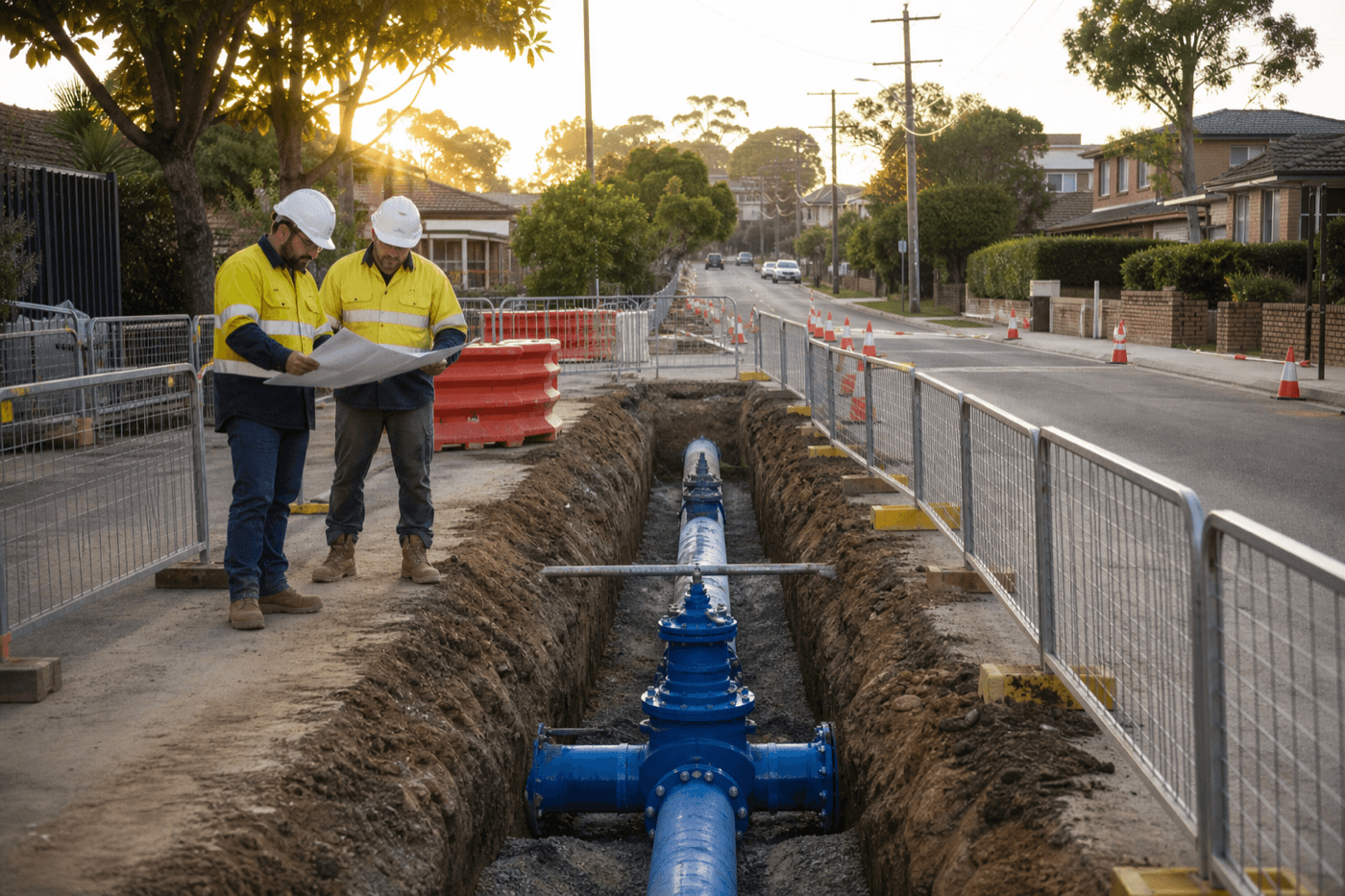
Potable Water Main Construction and Renewal: What Utilities Need to Plan
What utilities need to plan for potable water main construction and renewal — scoping new mains, water main renewal methods, pressure pipeline upgrades, live water connection sequencing, and choosing a potable water contractor in Sydney and NSW.
Service intelligence
Planning construction and renewal on live networks
On this page
Utilities and water authorities managing drinking-water networks rarely face a simple build-or-renew decision. Potable water main construction on greenfield extensions, growth corridors, and developer interfaces must align with hydraulic models, storage zones, and future demand. Parallel renewal programmes on ageing cast iron, asbestos cement, and early ductile iron assets compete for the same capital envelope — often in streets where outage tolerance is measured in hours, not days.
This service guide outlines what programme managers, asset planners, and delivery leads should confirm before capital approval, procurement, and field mobilisation. The focus is practical planning — not generic civil estimating — for Sydney metro networks, regional town supplies, and council-managed potable interfaces across NSW.
If your team is still framing the asset problem, pair this guide with when a water main needs renewal and the four waters explained for broader lifecycle context before locking delivery methods.
What utilities must scope before capital approval
Strong programmes start with a single asset register line — material, diameter, install year, failure history, hydraulic zone, and customer count downstream — not a corridor sketch on a map. Without that baseline, construction and renewal scopes drift between like-for-like replacement and undeclared upsizing.
Planning should also name constraints early: depth, adjacent utilities, traffic classification, environmental overlays, heritage frontages, and whether the main feeds hospitals, schools, or high-rise zones with narrow outage windows.
Document the business driver — growth, condition, compliance, or pressure performance — so delivery teams can recommend open-cut, trenchless, or staged renewal and rehabilitation methods that match the risk profile, not only the plant list.
Finally, agree handover expectations: as-built format, GIS updates, test certificates, chlorination records, and who signs off before the main returns to normal operation.
Planning potable water main construction on new and extended networks
New potable water main construction — network extensions, subdivision interfaces, and trunk upgrades — needs alignment, grade, thrust restraint, and valve spacing resolved before excavation. Utilities should confirm design freeze points: who owns hydrant spacing, air-valve locations, and tie-in details at existing headers.
Greenfield scopes still encounter live assets at boundaries. Early engagement on isolations, temporary supplies, and developer handover dates prevents contractors from discovering authority hold points after roads are cut.
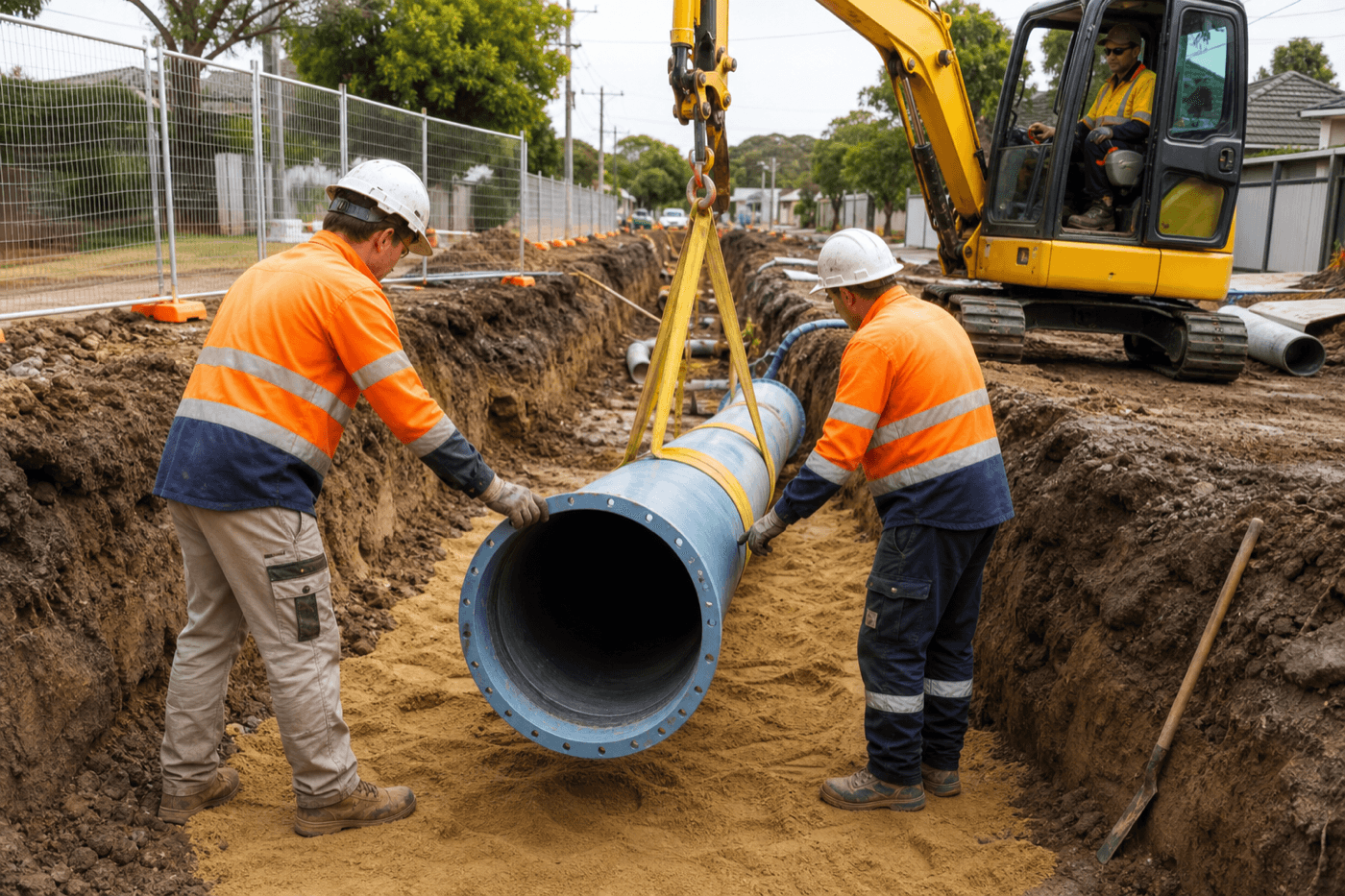
Coreflow delivers water infrastructure construction with live-network methodology on extensions and capital programmes — but the utility brief should state expected outage windows, bypass capacity, and whether night works are permitted before pricing closes.
What to plan for water main renewal programmes
Water main renewal planning differs from new construction because the asset already serves customers. Programme leads must decide whether rehabilitation, upsizing, or like-for-like replacement is the target — and whether condition data supports that choice.
Method selection should be explicit in the brief: open-cut replacement, pipe bursting, slip-lining, or localised insert repairs each carry different outage profiles, access needs, and reinstatement costs. A renewal scope that says "replace main" without naming method invites inconsistent pricing and programme risk.
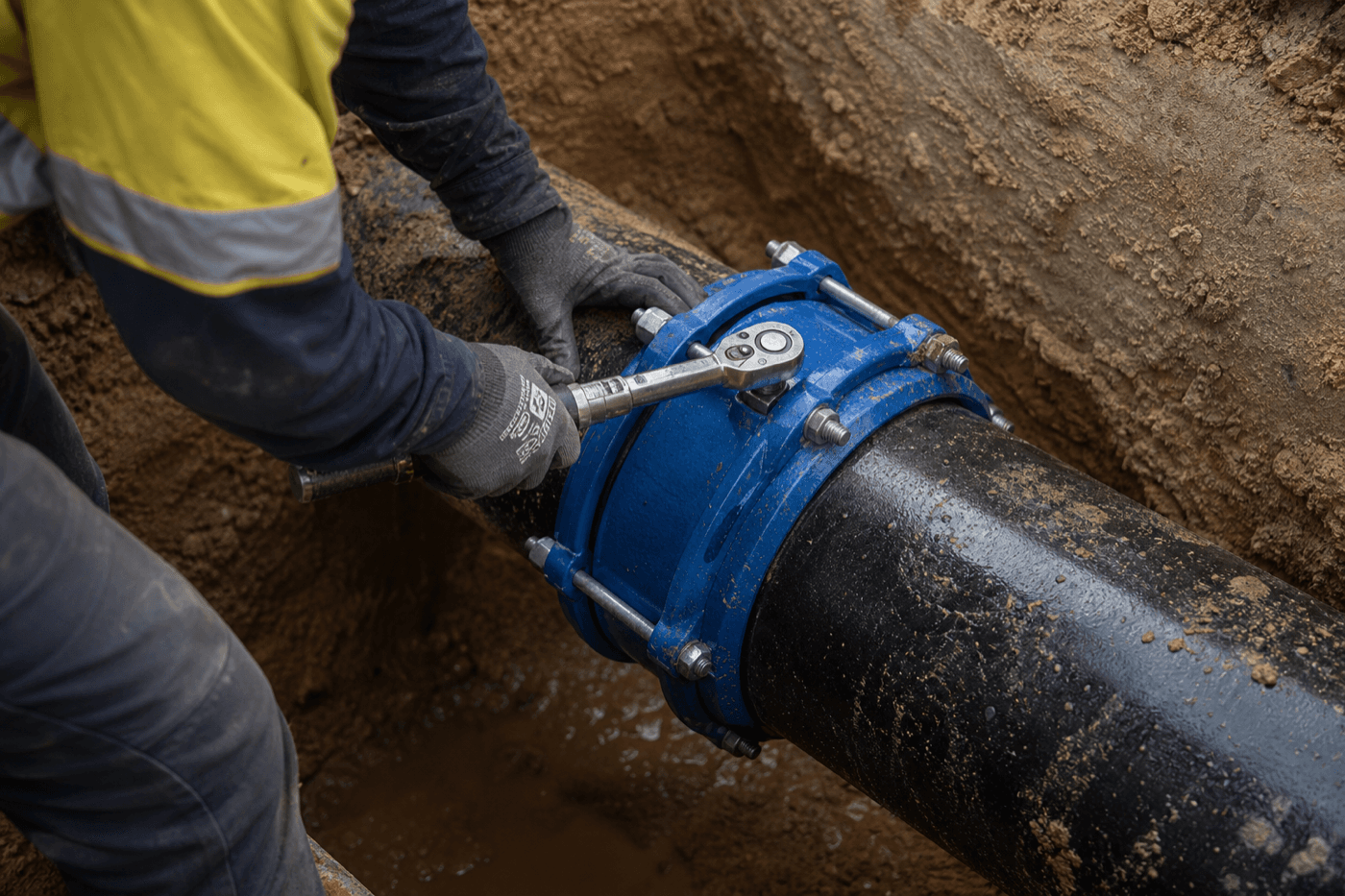
Sequencing matters on long corridors. Staging by valve section, coordinating with road resurfacing, and batching tie-ins reduces repeated mobilisation. Utilities that plan renewal as a pipe-only exercise often underestimate pavement, verge, and stakeholder costs.
See potable water main renewal project capability for how live-network staging, valve coordination, and documentation support handover on metropolitan and regional programmes.
Pressure pipeline upgrades on live drinking-water networks
Some programmes are driven by hydraulic performance rather than pipe condition. Pressure pipeline upgrades may be required when zoning intensifies, storage zones change, or fire-flow standards shift. Mains that were adequate at construction may no longer satisfy peak demand or resilience targets.
Upgrade planning should review downstream constraints — not only the section marked for larger diameter. Valve rationalisation, surge risk, pump station interfaces, and SCADA alarm thresholds often move with upsizing works.
Utilities should request whole-zone modelling outputs in the delivery brief: expected pressure bands, transient behaviour, and whether temporary operating regimes are needed during tie-ins.
Coreflow supports potable water main construction and renewal including pressure assets, valves, hydrants, and live tie-ins — but hydraulic intent must be clear before field teams lock thrust blocks and fitting schedules.
Live water connection sequencing and outage planning
Every renewal and extension eventually needs a live water connection — isolations, cut-ins, chlorination, flushing, and pressure restoration. Utilities should require a written isolation plan with named valve assets, verification steps, bypass routes, and maximum outage duration per customer class.
Hygiene discipline on potable tie-ins is non-negotiable. Briefs should reference swabbing, disinfection, sampling hold points, and who approves return to service. Ambiguity here is where programmes lose community trust fastest.
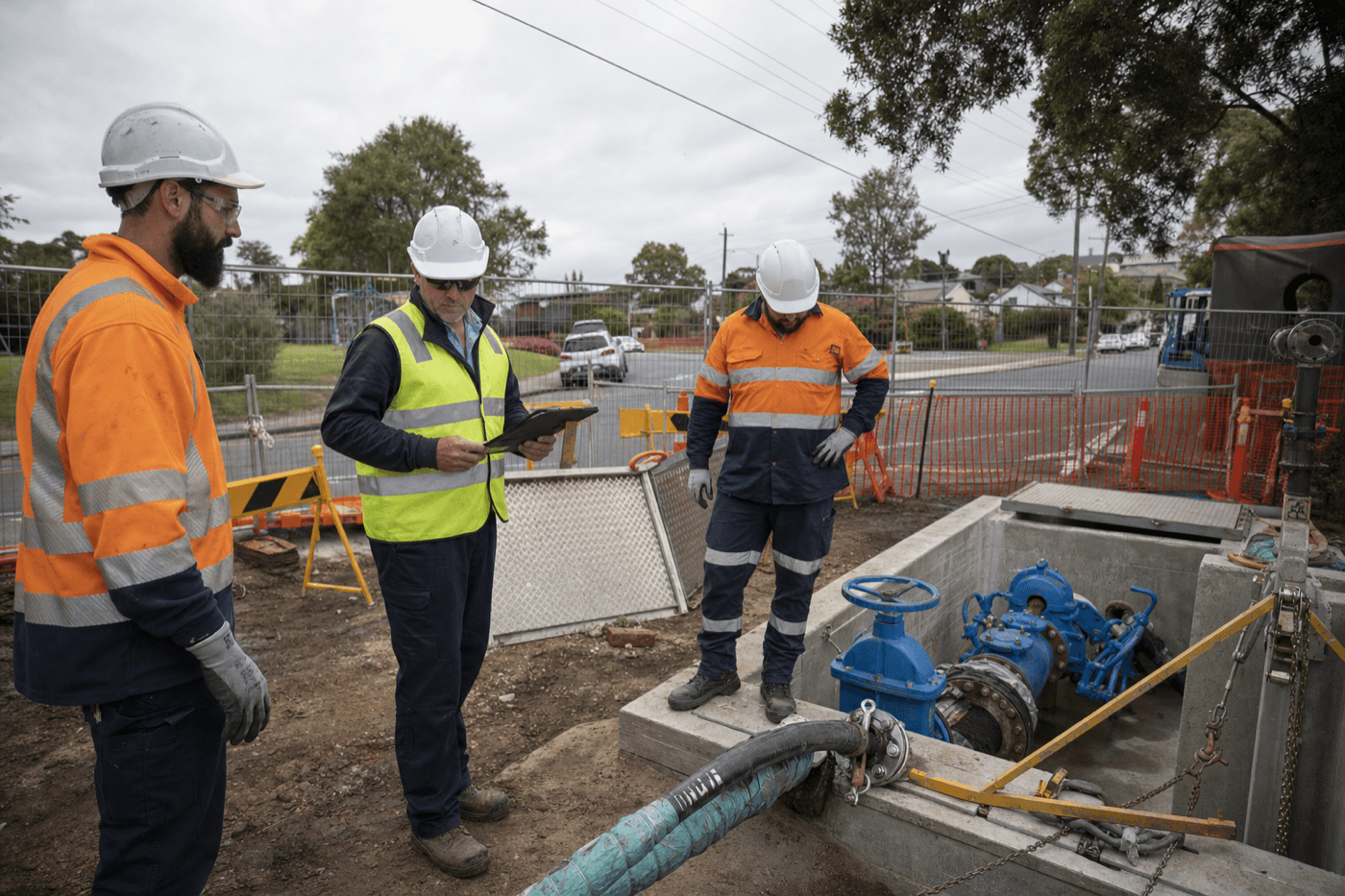
Communication plans belong in the same document pack: affected properties, schools, hospitals, and businesses need realistic windows — not best-case estimates copied from a greenfield site.
For lower-disruption staging options on active networks, see how live-network water works can minimise community disruption.
Programme governance and selecting a potable water contractor Sydney
Utilities shortlisting delivery partners should look beyond headline rates. A capable potable water contractor Sydney teams can demonstrate live-network method statements, accreditation fit for the works class, supervision depth, and recent comparable programmes — even when client names are confidential.
Governance checkpoints should be named in the contract: weekly outage reviews, photo and test-sheet submission, non-conformance routes, and escalation when corridor access slips. Programmes without field visibility often discover problems at reinstatement.
Ask how the contractor integrates with designers, traffic controllers, and council or road authority requirements. Fragmented interfaces are a common source of extended trenches and repeated pavement cuts on utility and council programmes.
For accreditation and procurement context, see how to choose a water authority accredited constructor in Sydney before finalising panel appointments.
Corridor, stakeholder, and reinstatement planning
Potable programmes are judged at the kerb. Utilities should require corridor plans that map bus routes, school zones, business loading zones, and pedestrian desire lines before excavation permits are sought.
Reinstatement specifications — pavement layers, verge restoration, driveways, and service reinstatement — should be agreed in the tender, not negotiated after backfill. Poor restoration generates claims that dwarf pipe supply variance.
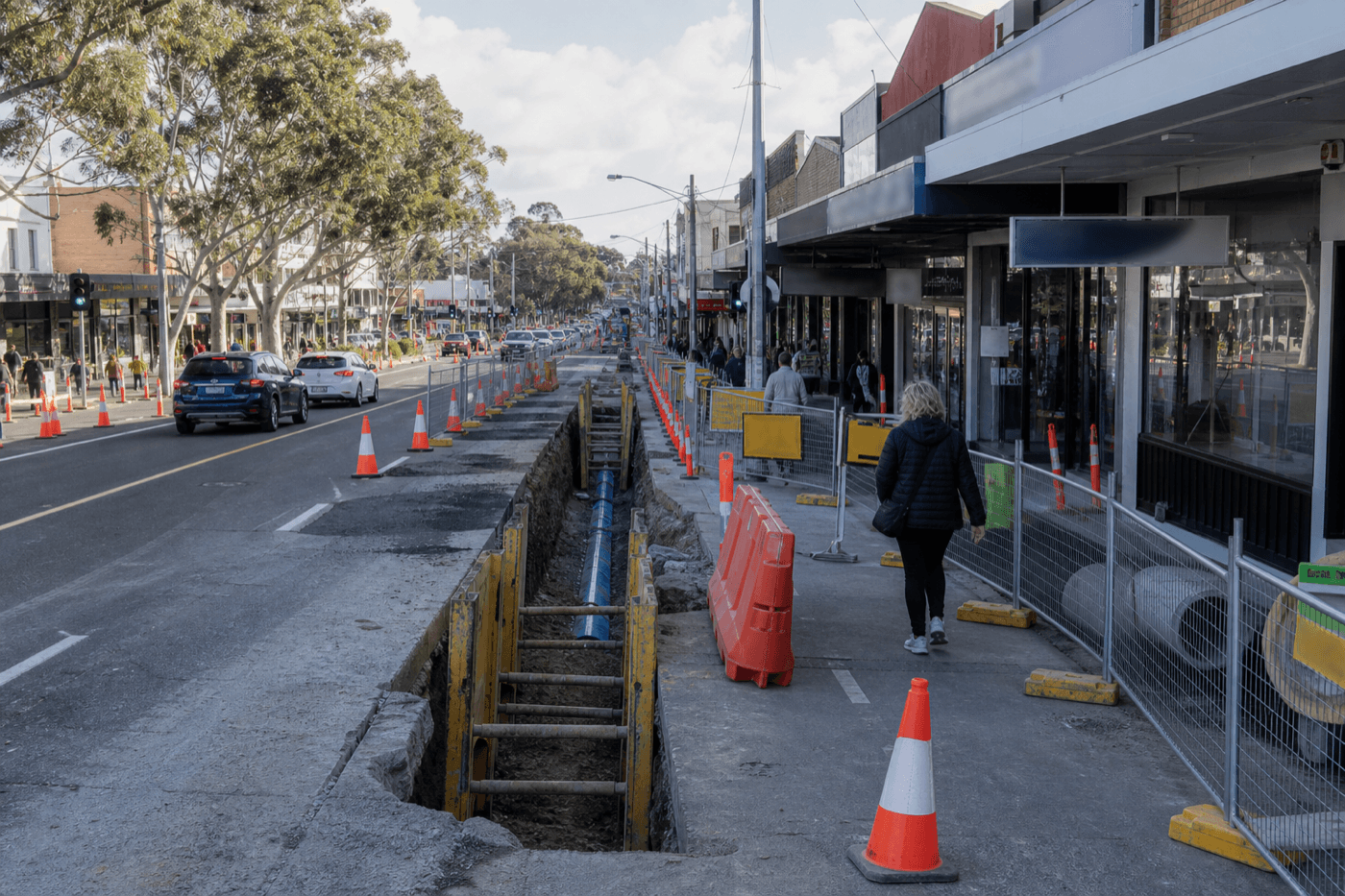
Mixed utility corridors need integrated sequencing. Shared trenches can reduce total disruption when designed deliberately; accidental overlap creates extended outages and unsafe working zones.
Commissioning, testing, and programme close-out
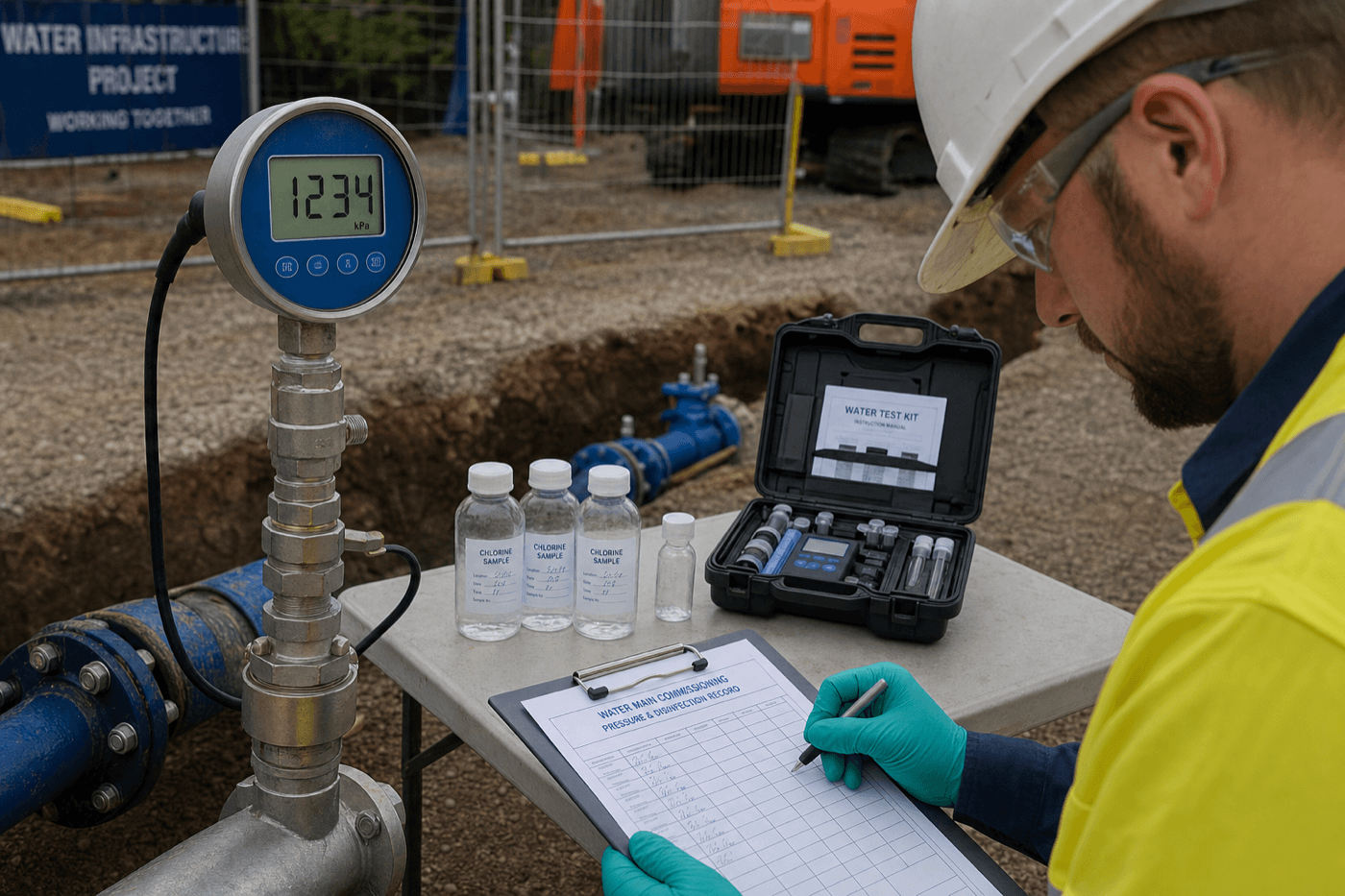
Return-to-service is a programme milestone, not a footnote. Utilities should define pressure test standards, hold durations, sampling regimes, flushing volumes, and who receives digital test packs before customers are reconnected.
GIS and asset updates should be due within agreed days of commissioning — delayed as-builts undermine the next renewal cycle and frustrate operations teams managing isolations.
Questions on documentation, accreditation, or outage planning can be directed through contact our team with asset lists, hydraulic summaries, and target programme years for practical input.
Building a defensible programme brief utilities can defend
Before capital submission, utilities should be able to answer — in one pack — why the programme exists, which method applies, how long customers may be affected, and what good handover looks like.
A practical checklist: confirm asset identity and failure history; align hydraulic drivers with modelling outputs; name renewal or construction method constraints; define live water connection and chlorination hold points; set corridor, traffic, and reinstatement standards; shortlist accredited delivery partners with live-network references; and lock commissioning and GIS expectations.
Coreflow supports utilities, councils, and asset owners across Sydney and NSW with potable water services from planning input through construction, renewal, and handover on live networks.
Common questions
Frequently asked questions
What should utilities plan before starting potable water main construction?
Confirm asset and hydraulic drivers, alignment and tie-in details, isolation and outage limits, bedding and jointing standards, traffic and corridor constraints, reinstatement specifications, and commissioning requirements. New construction still needs live-network planning at boundaries where mains connect to existing headers.
How is water main renewal planning different from new main construction?
Renewal programmes must account for active customers, existing valve assets, and method choice — open-cut, pipe bursting, slip-lining, or localised repair — while managing outage windows and hygiene controls. New construction focuses more on greenfield alignment and developer interfaces, though live tie-ins still apply at network boundaries.
When do pressure pipeline upgrades require more than like-for-like renewal?
When zoning, fire-flow standards, storage zones, or peak demand outgrow existing pipe capacity. Upgrades may involve larger diameters, valve rationalisation, and revised operating zones — requiring hydraulic modelling beyond simple condition-based replacement.
What belongs in a live water connection plan?
Named isolation valves and verification steps, bypass capacity, maximum outage duration by customer class, cut-in sequence, disinfection and flushing protocols, sampling hold points, and communication to affected properties. The plan should state who approves return to service before pressure is restored.
Related pages