
Culvert Construction vs Rehabilitation: How to Choose the Right Path
Culvert construction and rehabilitation compared — when to choose culvert replacement, culvert remediation, pipe culvert renewal, or box culvert construction for roads, corridors, and developments across Sydney and NSW.
Service intelligence
Construction or rehabilitation — which path fits
On this page
Asset owners facing a failing road crossing rarely get a neutral choice. Culvert construction and rehabilitation sit on a spectrum — from targeted culvert remediation and lining works through to full culvert replacement with new box culvert or pipe culvert structures. The right path depends on condition, hydraulic capacity, corridor access, and whether the asset can meet future catchment loads.
This decision guide helps councils, road authorities, developers, and delivery partners compare paths without defaulting to the most familiar contract line item. The focus is practical selection for Sydney metro corridors, regional highways, rail interfaces, and development crossings across NSW.
For broader asset context, see the four waters explained and how culverts connect stormwater, channels, and corridor drainage before locking scopes.
When new culvert construction is the defensible choice
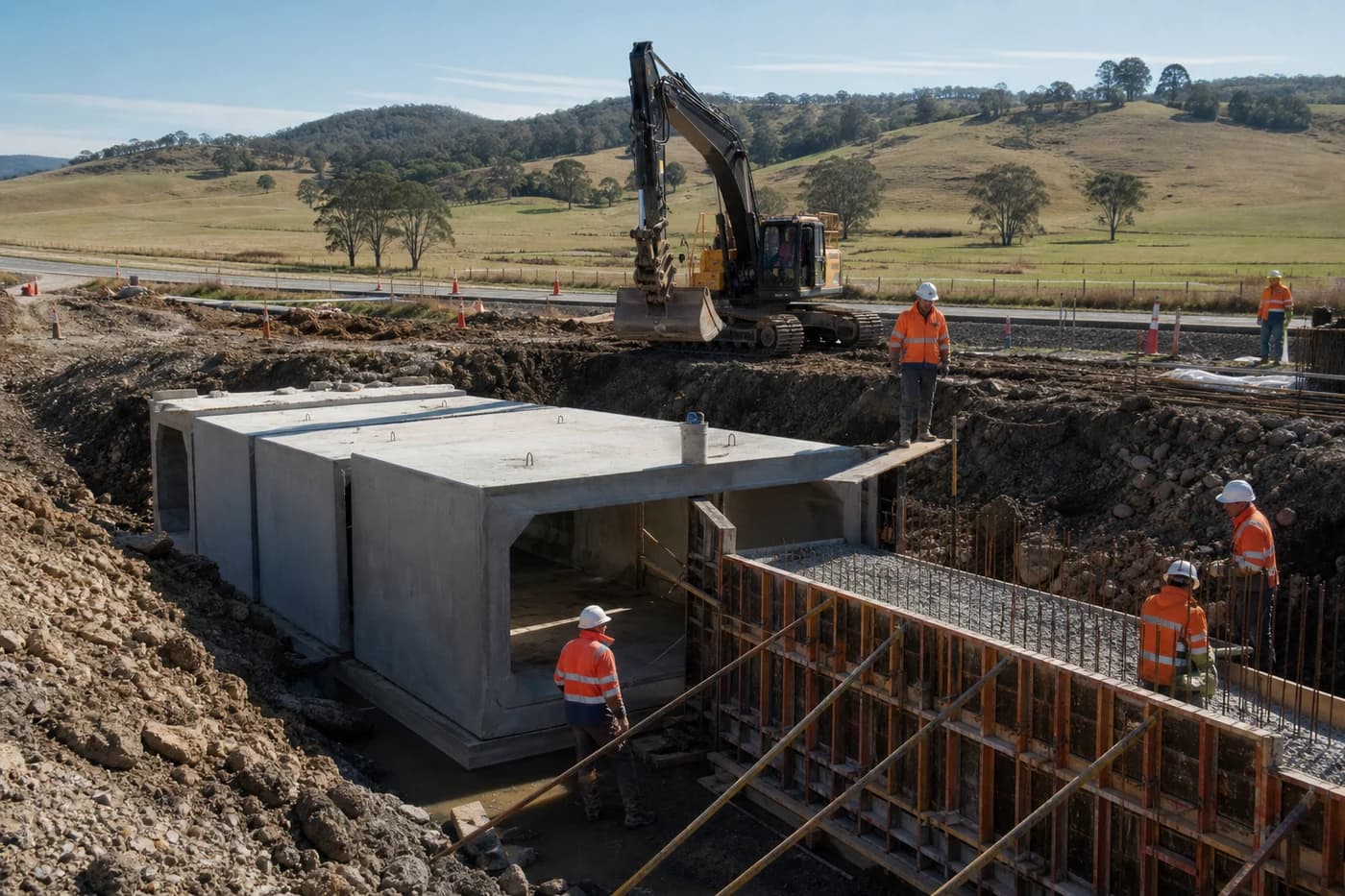
New construction — not rehabilitation — is usually justified when structural failure is widespread, hydraulic capacity is inadequate for current or planned catchments, alignment must change, or repeated remediation has reached diminishing returns.
Greenfield developments, road realignments, and capacity upgrades often require new box or pipe culvert structures designed to current standards rather than patched legacy assets.
Coreflow delivers culvert construction and remediation across roads, corridors, and developments — but the brief should state design intent, environmental constraints, and handover standards before pricing closes.
Box culvert construction for capacity and corridor upgrades
Box culvert construction suits crossings that need rectangular flow sections, pedestrian or maintenance access, and robust headwall interfaces under heavily trafficked roads. Precast or cast-in-place options each carry different programme, jointing, and site-access implications asset owners should name in tender documents.
Box structures also help where silt traps, debris screens, or future inspection regimes are part of the design. Construction scopes should include apron, wingwall, and scour protection — not only the barrel section.
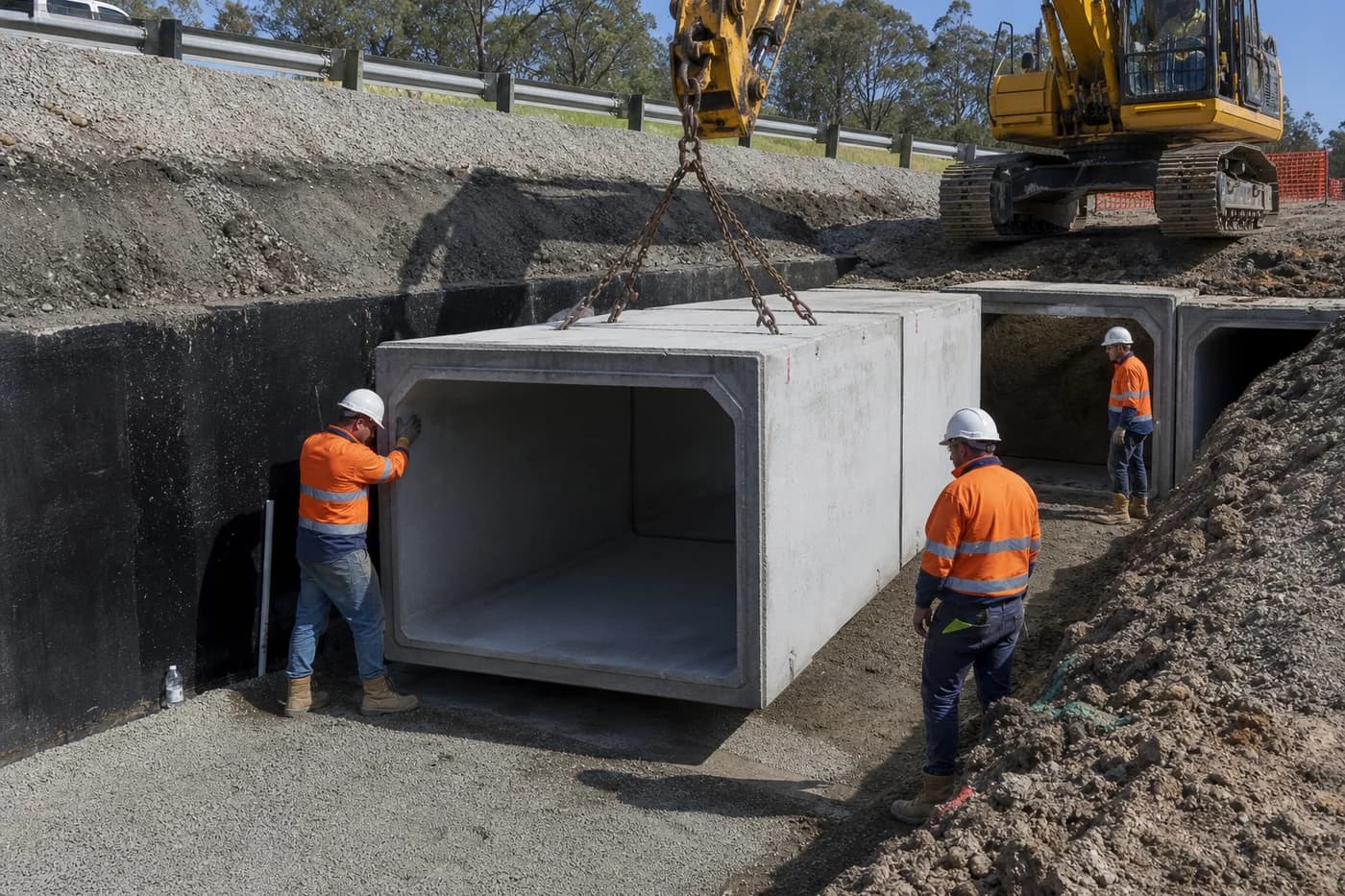
See stormwater and culvert programme capability for integrated drainage and structure delivery on council programmes.
Pipe culvert remediation when structure still has life
Pipe culvert assets — corrugated metal, reinforced concrete, and composite sections — may suit culvert remediation when wall loss is localised, invert scour is repairable, and hydraulic capacity remains adequate. Relining, invert paving, joint sealing, and headwall repairs can extend life at lower corridor disruption than full replacement.
Remediation fails when deformation, joint failure, or section loss is distributed along the barrel. Asset owners who specify remediation without condition evidence often fund a temporary fix before replacement becomes unavoidable — with duplicated mobilisation cost.
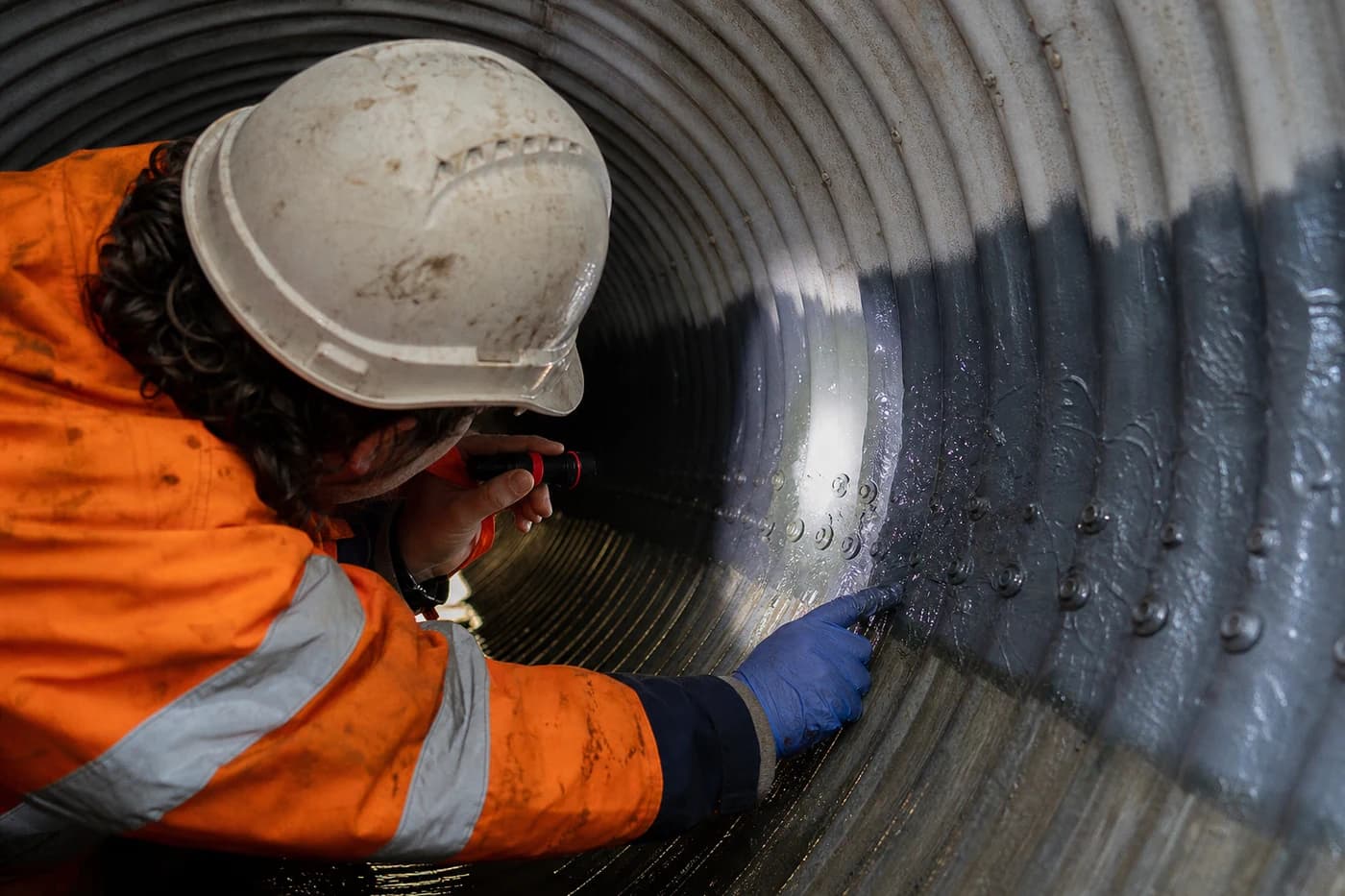
Document the decision. Inspection photos, capacity checks, and rejected replacement scenarios protect programme leads during audits and budget reviews.
When culvert replacement beats another round of remediation
Culvert replacement becomes rational when cumulative remediation spend approaches new construction economics, outage and traffic disruption will repeat with each patch cycle, or environmental risk from failing structures outweighs short-term capital savings.
Replacement also wins when standards have shifted — fish passage, debris management, flood immunity, or load ratings that legacy assets cannot meet without full reconstruction.
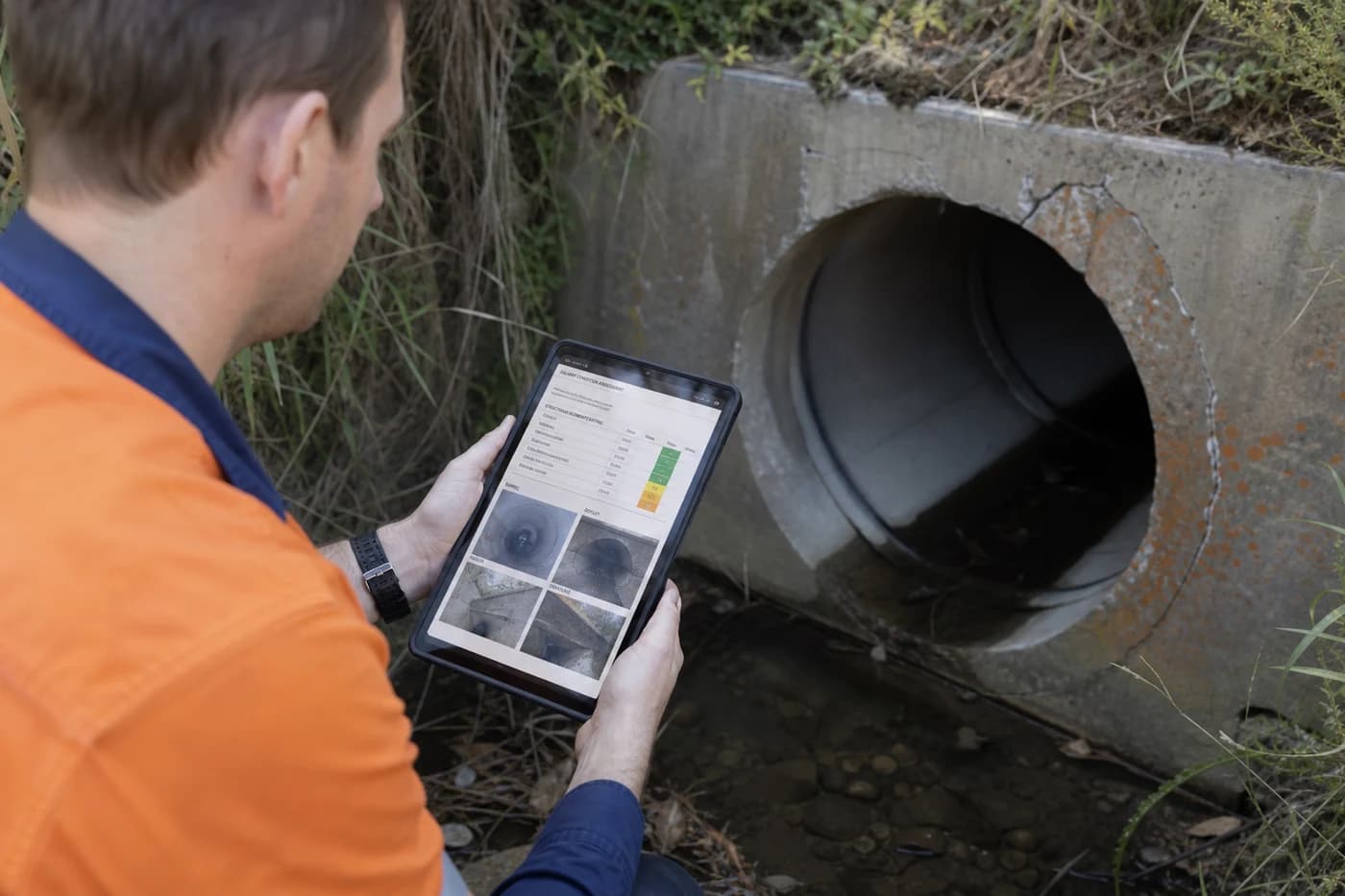
Pair replacement planning with inspection and condition assessment so procurement compares consistent structural and hydraulic evidence across a programme.
Headwalls, aprons, and scour protection in rehabilitation scopes
Many culvert failures start at headwalls, inlets, and outlets — not in the mid-barrel section. Rehabilitation scopes that renew pipe or box barrels while leaving failing aprons untouched often see repeat scour and outlet erosion within a few flood seasons.
Assess the full crossing: upstream sediment load, outlet velocity, road edge stability, and maintenance access for debris removal.
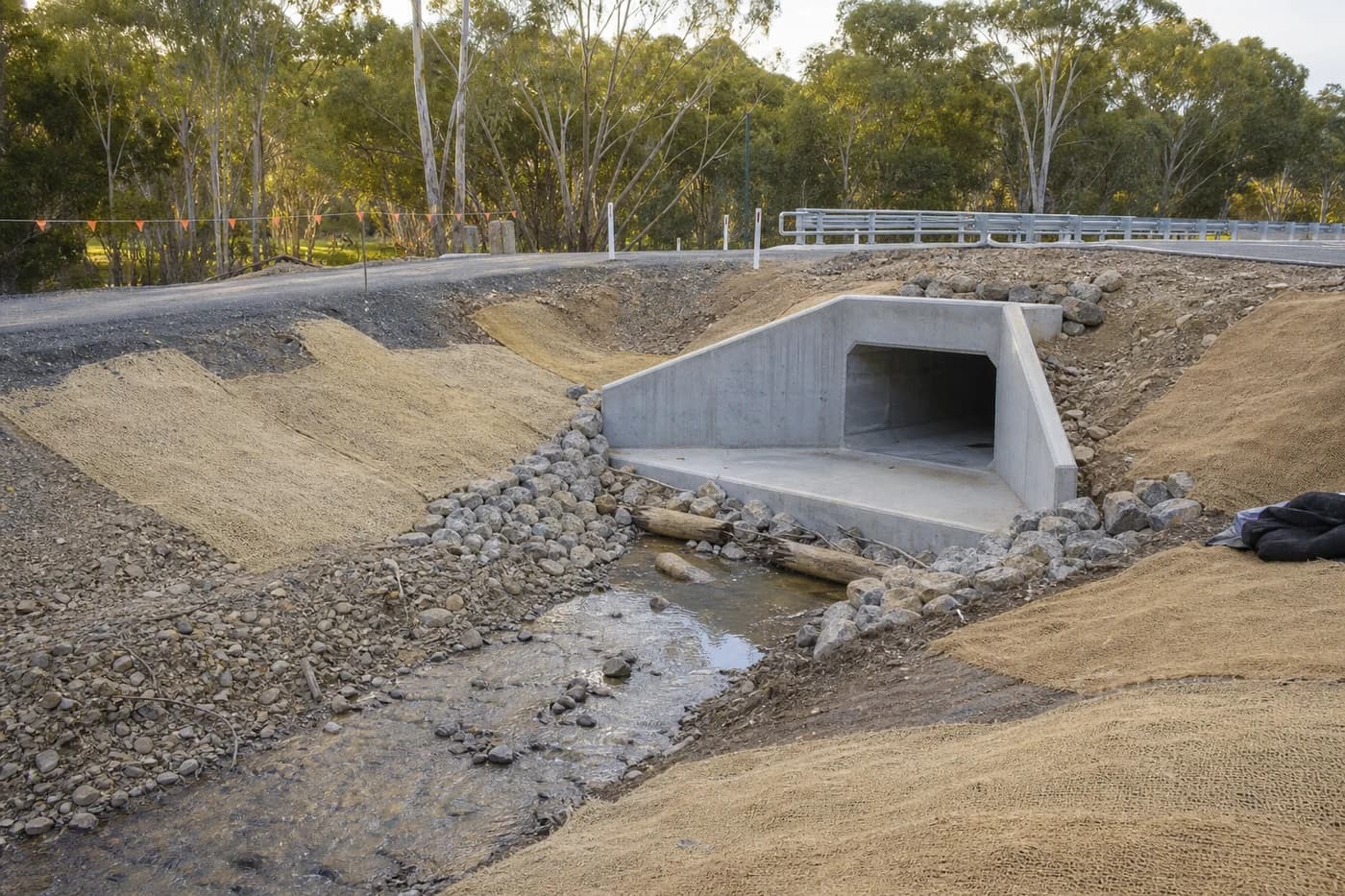
Where crossings interface with open channels, coordinate with stormwater drainage upgrades planning so upstream pits and channels do not overwhelm a renewed culvert.
Safety and methodology on live road culvert corridors
Culvert works on active roads require integrated traffic management, trench and excavation support, environmental controls for waterways, and clear hold points before backfill and road reopening.
Construction and rehabilitation both need staged access — partial lane closures, night works, and detours should be priced against realistic programme duration, not best-case excavation rates.
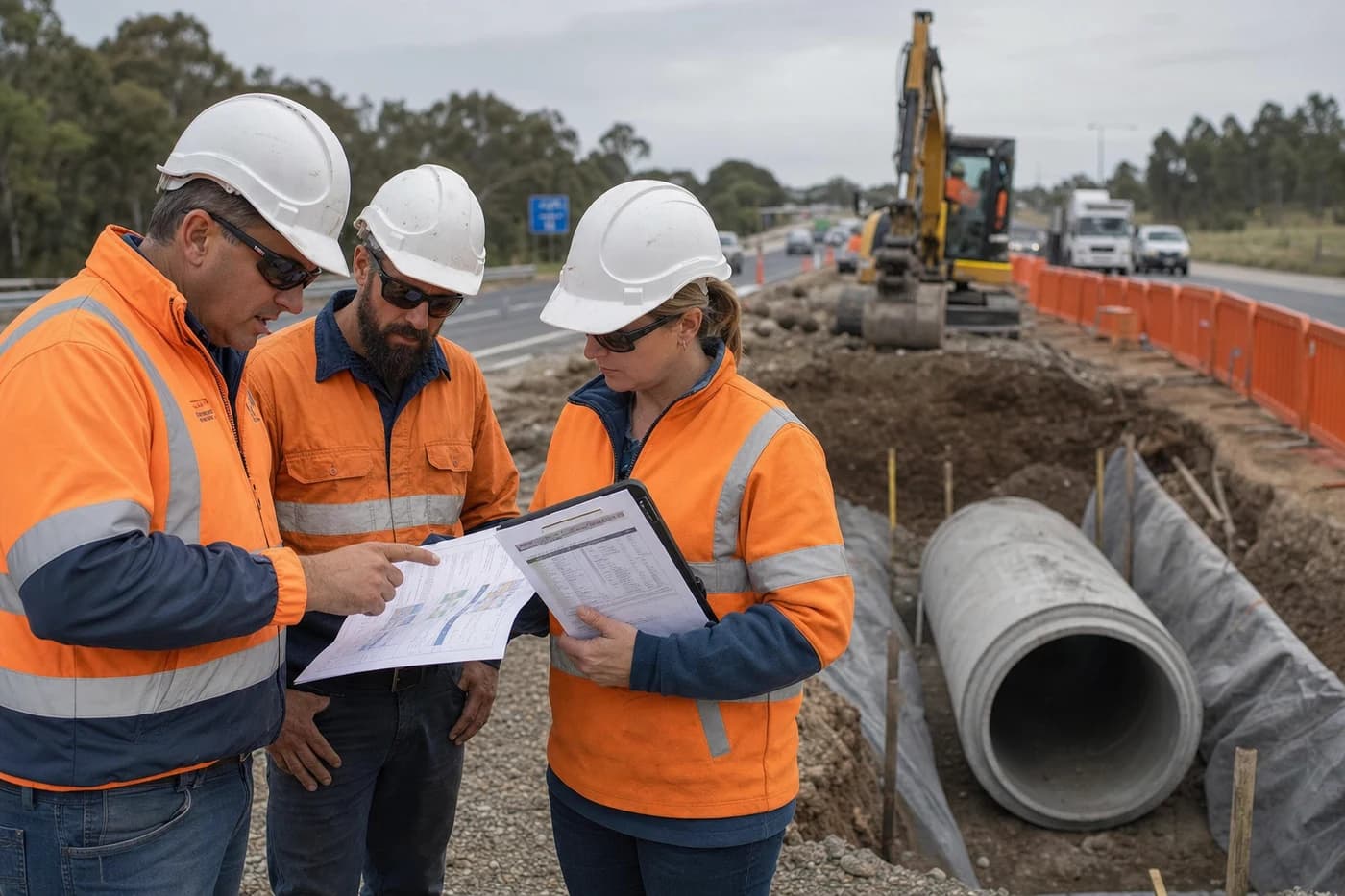
For corridor disruption principles, see how live-network water works can minimise community disruption.
A practical decision framework for asset owners
Work through these questions before capital approval:
1. Does inspection evidence show distributed structural failure or localised defects?
2. Does hydraulic modelling confirm capacity for current and planned catchment flows?
3. Can remediation restore headwalls, aprons, and scour protection — not only the barrel?
4. What is the whole-of-life cost of repeated remediation versus replacement?
5. Do corridor constraints — depth, utilities, traffic, environmental windows — favour one method?
6. What handover documentation — as-builts, inspection access, maintenance regimes — does the asset owner require?
Councils managing broader renewal portfolios can review NSW council renewal programme planning for procurement and multi-year sequencing context.
Condition assessment inputs that support the right path
Good decisions start with structured condition data — internal inspection, inlet and outlet surveys, deformation measurements, infiltration and exfiltration indicators, and debris or sediment history.
Hydraulic review should accompany structural ratings. An asset that looks repairable may still be undersized for intensified catchments — pushing the programme toward construction or upsizing rather than remediation alone.
Questions on inspection scope, method selection, or programme delivery can be directed through contact our team with asset lists, crossing locations, and target programme years.
Procurement and delivery: locking the path before mobilisation
Tender documents should name the permitted paths — remediation, relining, partial replacement, full replacement — and the evidence required to switch methods if field conditions differ. Open-ended "make safe" scopes invite inconsistent pricing and programme risk.
Shortlist contractors with demonstrated road-corridor culvert experience, environmental compliance on waterway crossings, and clear documentation habits suited to council and authority handover.
Explore full culvert services capability and industry experience with councils, contractors, and asset owners across Sydney and NSW.
Coreflow supports renewal and rehabilitation and new construction scopes where culvert construction and rehabilitation must be integrated with broader corridor or four-water programmes.
Common questions
Frequently asked questions
When should asset owners choose culvert construction over rehabilitation?
When structural failure is widespread, hydraulic capacity is inadequate, alignment must change, environmental or load standards require full reconstruction, or repeated remediation has reached poor whole-of-life economics. Localised defects on otherwise sound assets may still suit remediation.
What is the difference between culvert remediation and culvert replacement?
Remediation repairs or lines an existing barrel and associated structures to extend service life — relining, joint sealing, invert works, and headwall repairs. Replacement removes or abandons the failing asset and installs a new pipe or box culvert designed to current capacity and structural standards.
When is a box culvert preferable to a pipe culvert?
When rectangular flow sections, maintenance access, debris management, or headwall geometry favour a box structure — often on higher-capacity road crossings or where future inspection regimes matter. Pipe culverts may suit smaller crossings with simpler geometry when condition and capacity still meet programme needs.
What inspection evidence supports a construction vs rehabilitation decision?
Internal and external structural surveys, deformation and wall-loss measurements, inlet and outlet condition, hydraulic capacity review, sediment and debris history, and whole-of-life cost comparison between remediation and replacement scenarios.
Related pages