
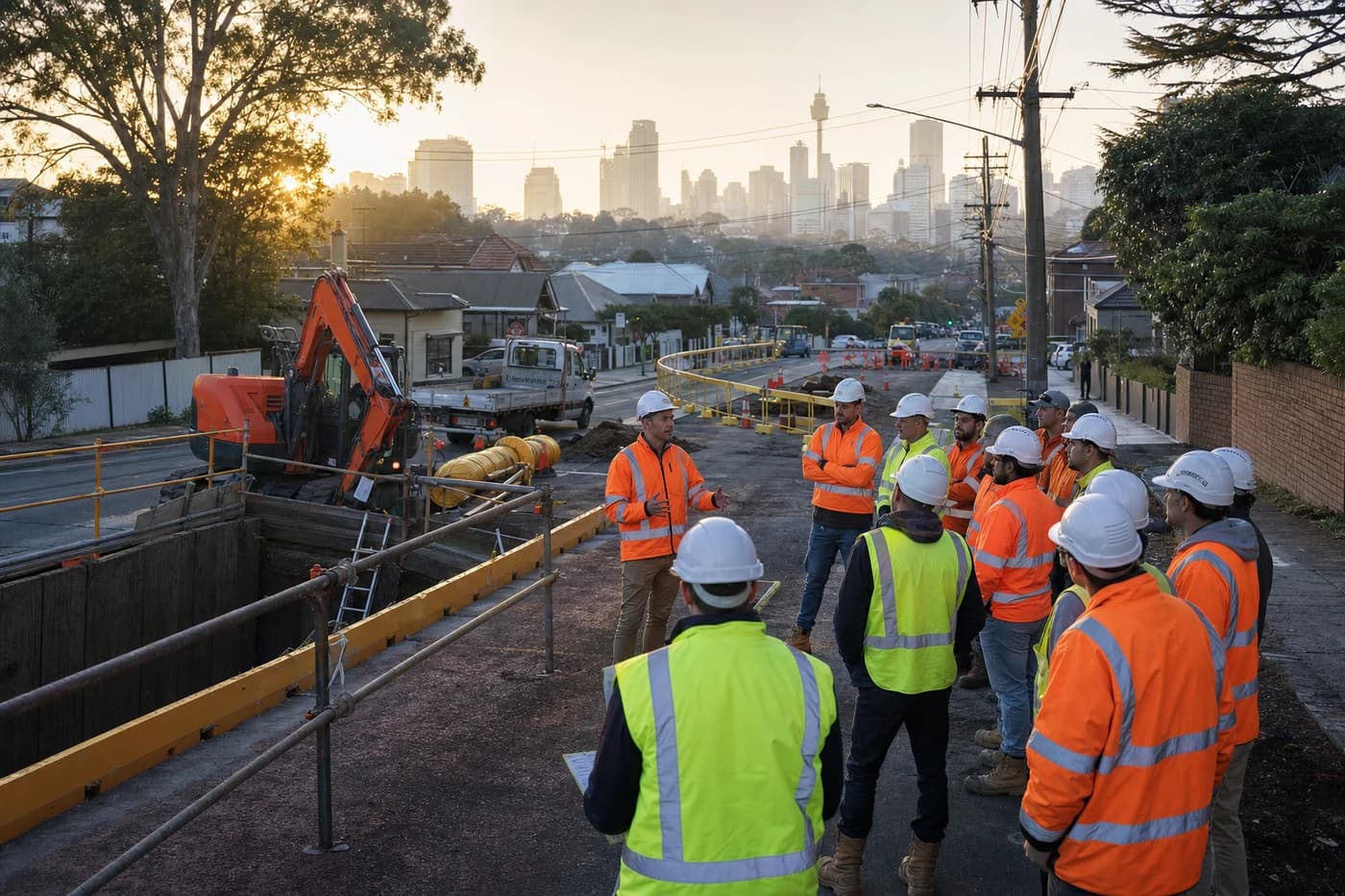
Major Works vs Minor Works: What Is the Difference for Sydney Water Projects?
Sydney Water major works vs minor works explained — what separates major works constructor and minor works constructor scopes, Sydney Water listed provider context, wastewater minor works, and how asset owners classify programmes across metro Sydney.
Trust, projects & careers
Major and minor works on metro programmes
On this page
If you manage capital programmes, developer interfaces, or maintenance portfolios in metro Sydney, you will encounter the Sydney Water major works vs minor works distinction long before the first shovel hits the ground. It shapes which constructors can be appointed, how inspections run, how long outages may last, and what documentation must exist at practical completion.
The labels are not marketing tiers — they reflect different risk profiles on live drinking-water and wastewater networks. Misclassifying a scope can delay authority approvals, inflate cost, or leave teams under-resourced for the supervision and hold points a programme actually needs.
This explainer is for programme managers, contractors, and delivery partners who want clarity before procurement — not a substitute for authority confirmation on a specific scope. For appointment criteria, see how to choose a water authority accredited constructor in Sydney after you understand the works class.
Why Sydney Water separates major and minor works
Water authorities classify works to match constructor capability, inspection intensity, and consequence management to the asset being built or renewed. A large-diameter main tie-in on a critical trunk route carries different failure modes than a localised service connection or short sewer repair — even when both occur on live networks.
Classification also protects programme economics. Requiring major-works systems on every small repair would slow routine maintenance; appointing minor-works teams on complex programmes creates compliance and safety exposure asset owners cannot afford.
Coreflow delivers as a water authority accredited constructor for major and minor works across Sydney and NSW — confirm programme-specific accreditation fit with our team before locking contract scopes.
What major works programmes typically involve
A major works contractor is usually engaged where pipe diameters, outage windows, traffic complexity, and network consequence are higher. Major works often include trunk main renewal, large valve installations, complex live tie-ins, extended isolations, and programmes where failure would affect significant customer numbers or critical receivers.
Documentation intensity rises with scale — detailed method statements, outage plans, chlorination or wastewater hygiene protocols, test regimes, and authority inspection hold points are standard, not optional extras.
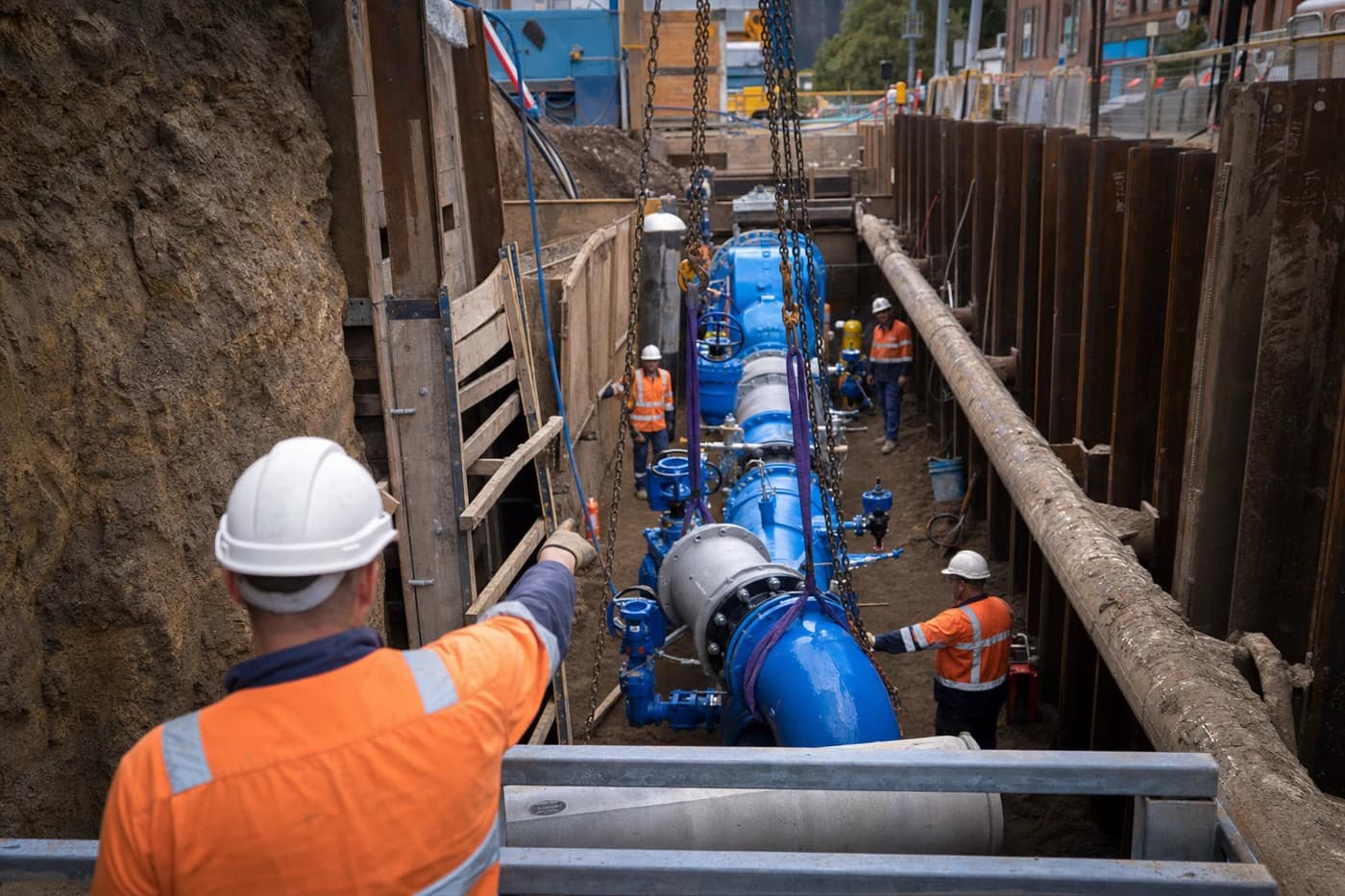
See potable water main renewal project capability for how major renewal programmes are staged on live metro networks.
How major works differ in supervision and programme risk
Major works programmes demand deeper supervision benches — experienced site managers, quality leads, and authorised signatories who understand authority submission formats and can respond to non-conformances without stopping the network programme.
Stakeholder coordination expands: traffic authorities, emergency services interfaces, schools and hospitals on outage routes, and developer contributions on shared corridors all appear more often on major scopes.
Programme leads should expect longer mobilisation, more detailed design interfaces, and capital budgets that reflect outage contingency — not only pipe and plant rates.
Minor works scopes and wastewater minor works on live networks
A minor works contractor typically delivers localised connections, short renewals, valve and meter assemblies, targeted repairs, and lower-complexity assets — still on live networks, but with different duration and documentation profiles than major programmes.
Wastewater minor works — sewer connections, localised repairs, manhole interfaces, and hygiene-controlled maintenance scopes — remain sensitive to gas monitoring, spill controls, and community impact even when excavation is compact. Minor does not mean low risk; it means different scale and supervision intensity.
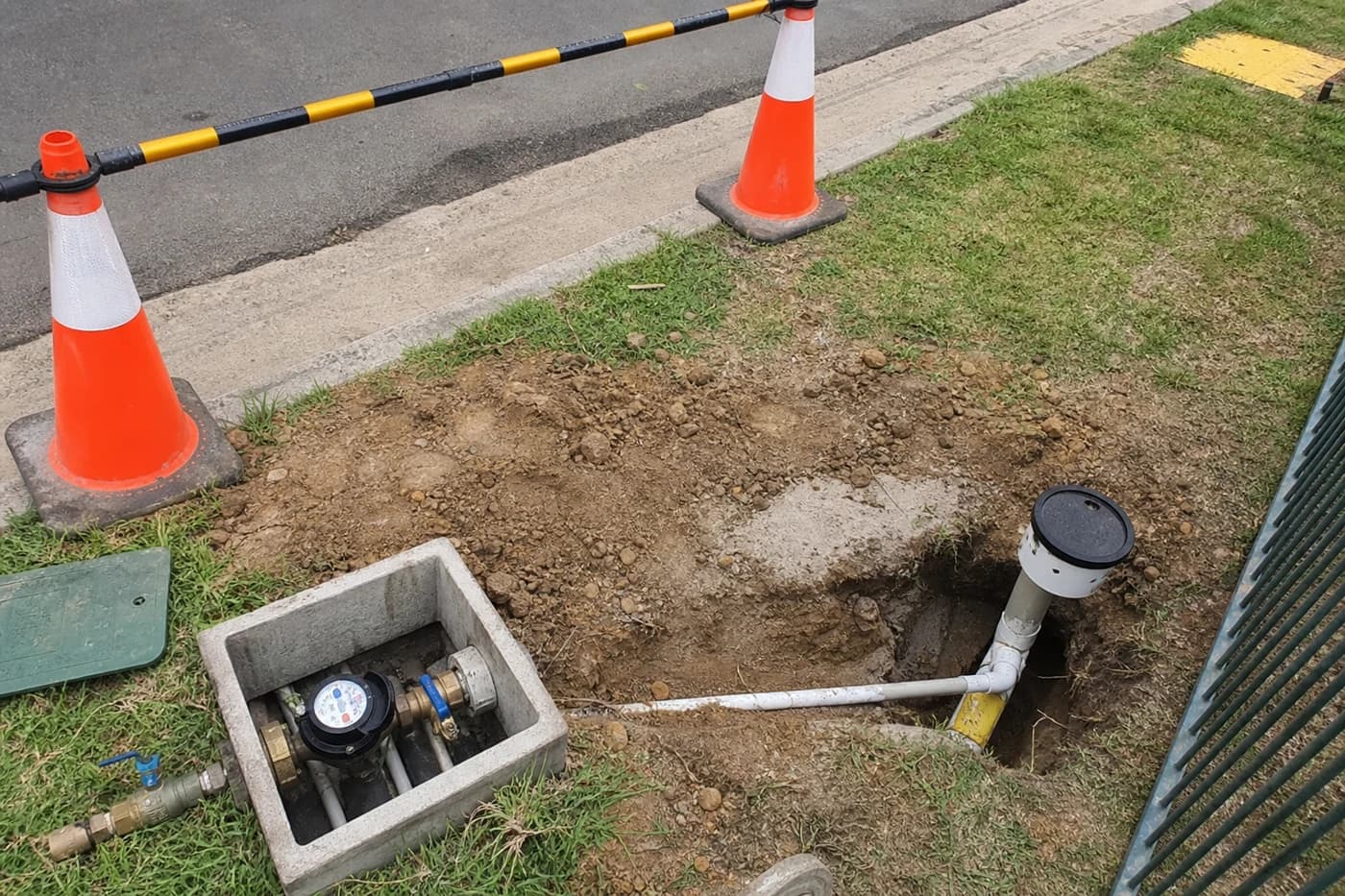
Explore wastewater services and wastewater rehabilitation on live networks for how sewer scopes behave during renewal programmes.
Sydney Water listed provider context and procurement paths
Metro searches often reference a Sydney Water listed provider because authority rules govern materials, inspections, connections, and handover documentation on drinking-water and wastewater assets. Listed or accredited status is a necessary filter — not proof that every works class is covered.
Procurement paths vary: panel arrangements, project-specific tenders, developer-delivered works with authority hold points, and subcontracted utility scopes under principal civil contracts. Each path still requires the constructor's accreditation class to match the classified scope.
Verify current accreditation for the works type being procured, and confirm key supervisors have recent authority programme experience — not only company-level listing.
Inspection hold points and documentation discipline
Both major and minor works face authority inspections — the difference is frequency, complexity, and consequence of failure at hold points. Constructors who treat minor works as "light documentation" often struggle when an inspector requests test evidence, as-builts, or hygiene records at practical completion.
Asset owners should specify submission formats, photo records, and sign-off chains in tender documents before award.
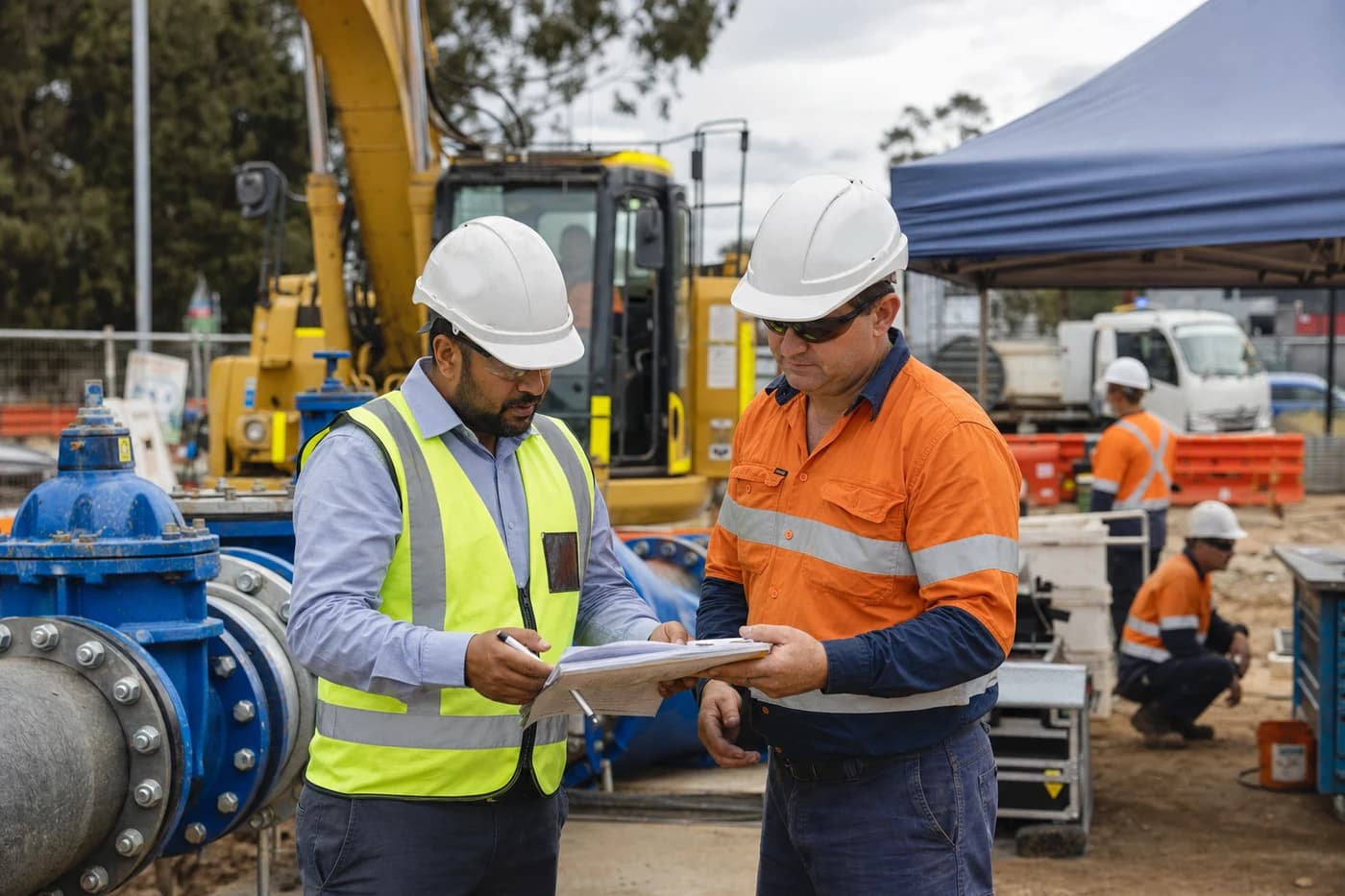
For live-network methodology context, see how live-network water works can minimise community disruption.
What delivery teams experience on major vs minor programmes
For field crews, supervisors, and project leaders, the works class shapes daily rhythm — not only paperwork. Major programmes often run longer mobilisations, multi-week outages, and larger plant footprints. Minor works may rotate across many small sites with tighter access windows and higher community visibility per metre of trench.
That diversity is why careers at Coreflow emphasise live-network experience across potable, wastewater, stormwater, and culvert assets — teams build judgement by delivering both programme scales on Sydney and NSW networks.
Review project capability across renewal, rehabilitation, and construction scopes to see how programme scale varies in practice.
Metro street context for minor works programmes
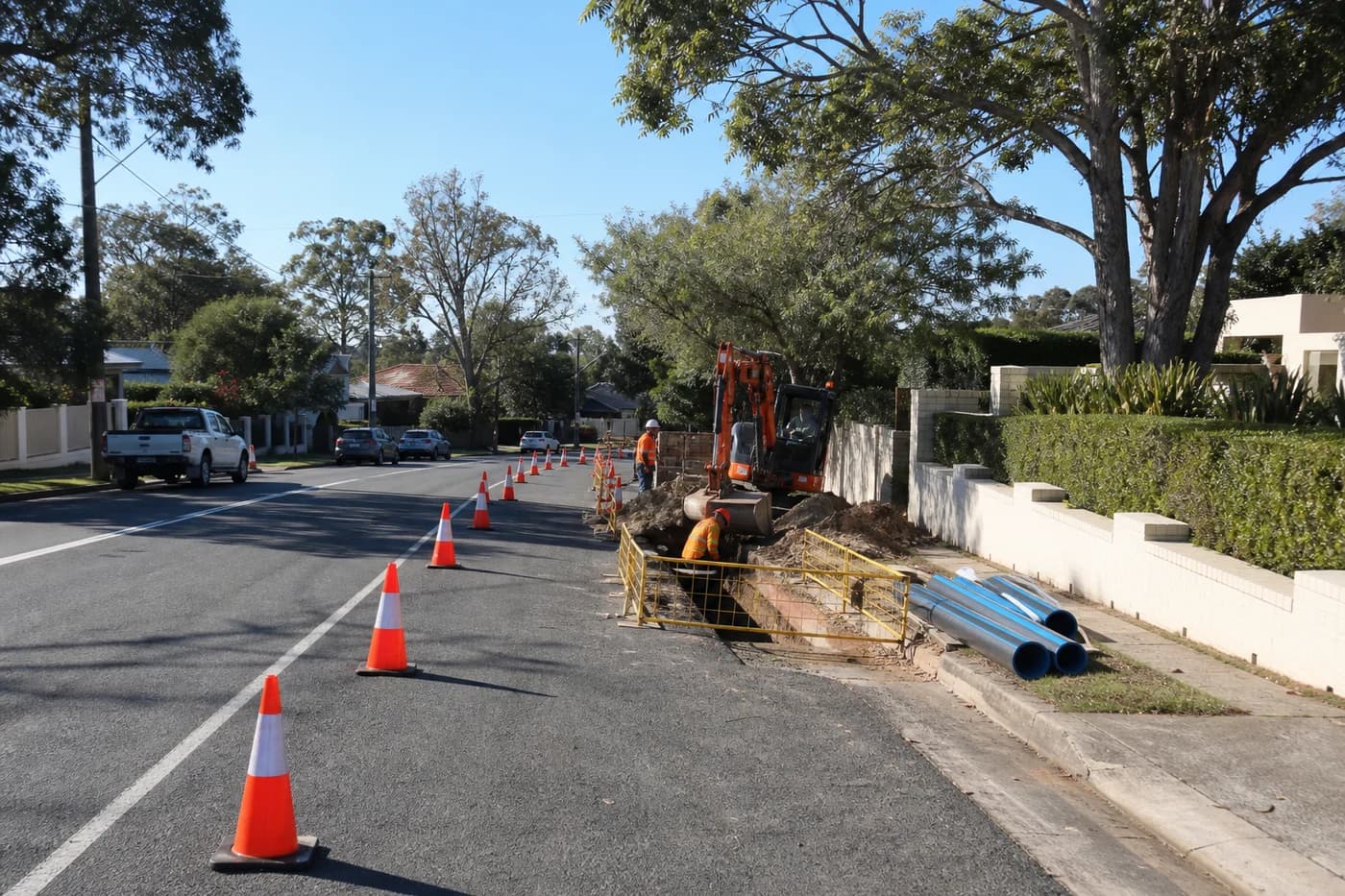
Minor works dominate what communities see at the kerb — driveway access, bus stops, school zones, and footpath detours on suburban streets across metro Sydney. Programme success is often measured in complaint rates and reinstatement quality as much as technical fit-out.
Even compact wastewater minor works can generate odour and access concerns if bypass pumping, hygiene controls, and communication are under-planned.
Classifying scopes before procurement locks the wrong path
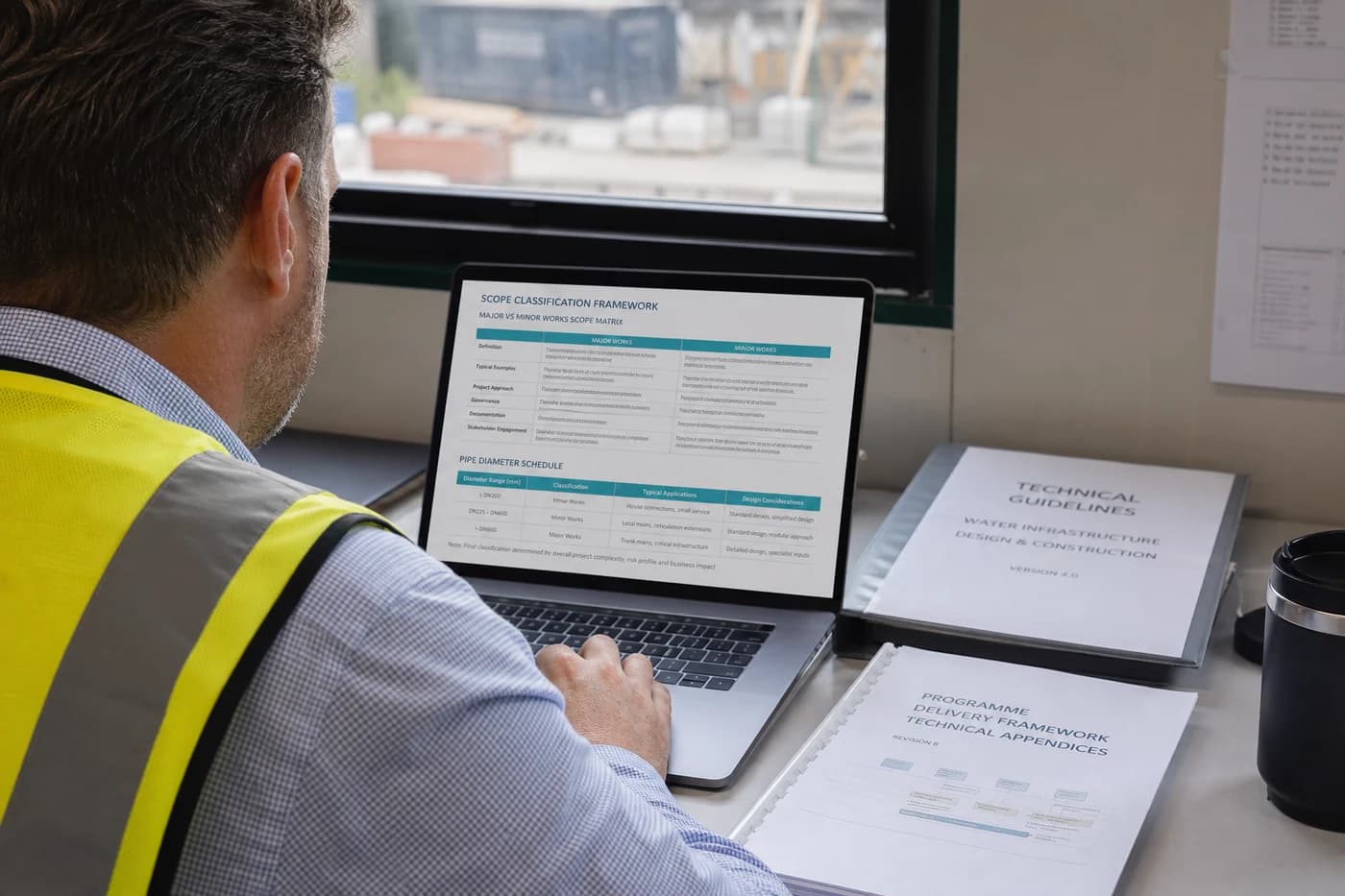
Before issuing tenders, programme leads should classify scopes using authority guidance — pipe sizes, asset type, outage duration, traffic impact, and network criticality — then map to Sydney Water major works vs minor works requirements. Reclassification after award is expensive and damages trust with authorities and communities.
Ask constructors to confirm accreditation class, reference programmes of similar scale, and explain supervision and documentation models — not only rates and duration.
Questions on scope classification or delivery fit can be directed through contact our team with programme summaries and target commencement dates.
Choosing the right works class — practical next steps
Work through this sequence before appointment:
Confirm authority classification rules for the specific asset and contract framework.
Document pipe sizes, outage tolerance, traffic complexity, and inspection hold points.
Match procurement to major works contractor or minor works contractor accreditation — not habit or panel convenience alone.
Verify Sydney Water listed provider or accredited status is current for the works class.
Plan documentation, testing, and handover expectations before mobilisation.
Utilities and delivery partners can review Coreflow's water authority industry experience or read what a water infrastructure contractor does in Sydney for broader delivery context across the four waters.
Common questions
Frequently asked questions
What is the difference between Sydney Water major works and minor works?
Major works typically involve larger assets, longer outages, higher network consequence, and more intensive supervision and documentation on live drinking-water and wastewater networks. Minor works cover localised connections, shorter renewals, and lower-complexity repairs — still on live assets, but with different scale and accreditation requirements. Exact classification depends on authority rules and the specific scope.
Do I need a major works contractor or minor works contractor for my programme?
Match the constructor's accreditation class to the classified scope before appointment. Major programmes need major-works capability; localised connections and targeted repairs may suit minor-works accreditation. Misalignment creates approval risk or unnecessary cost. Confirm requirements with the authority for your specific works.
Is a Sydney Water listed provider accredited for all works types?
Listed or accredited status is a starting filter — not automatic coverage for every major and minor works class. Verify current accreditation, supervisor experience, and recent comparable programmes for the scope you are procuring.
What are wastewater minor works?
Localised sewer connections, repairs, manhole interfaces, and hygiene-controlled maintenance scopes on live wastewater networks. They are smaller in scale than major sewer renewal programmes but still require gas monitoring, spill controls, and authority documentation discipline.
Related pages