
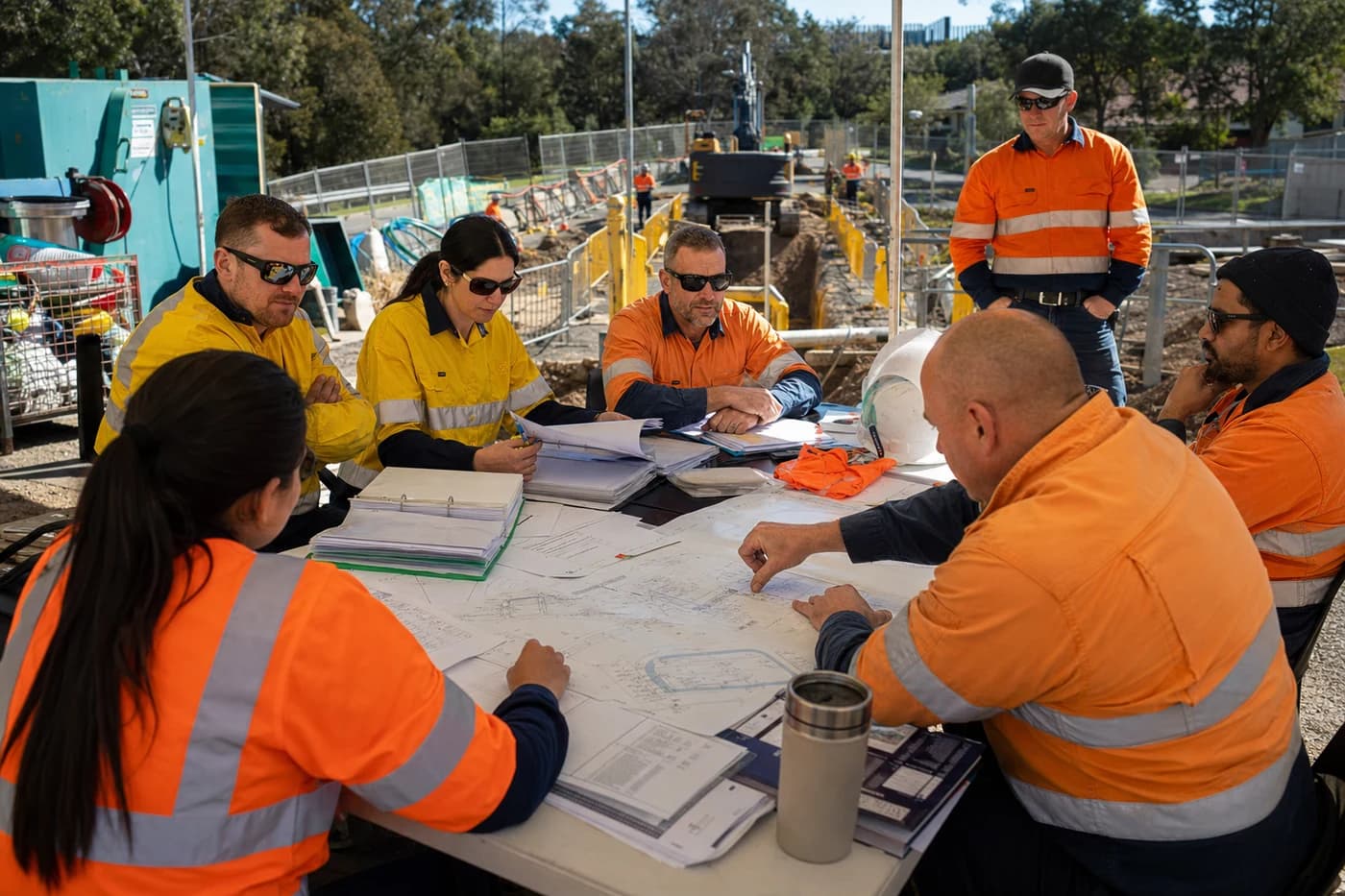
Live Water Network Construction: A Pre-Start Checklist for Project Teams
A live water network construction checklist for project teams — water infrastructure project planning, civil utility construction readiness, live network safety, and water main construction hold points across Sydney and NSW.
Public infrastructure & procurement
Pre-start readiness on live networks
On this page
Mobilisation without a structured live water network construction checklist is how programmes lose float — authority hold points missed, isolations improvised, traffic plans that fail on day one, and documentation gaps that surface at practical completion.
This checklist is for project managers, site supervisors, council officers, and contractor delivery leads preparing to work on live drinking-water, wastewater, stormwater, or culvert assets across Sydney and NSW. Use it as a pre-start gate — not a substitute for contract specifications, authority requirements, or site-specific risk assessments.
For disruption-focused methodology after mobilisation, see how live-network water works can minimise community disruption. For council programme procurement context, see water infrastructure for NSW councils.
Why pre-start discipline matters on public infrastructure programmes
Public-sector and utility programmes carry higher scrutiny — outage windows, inspection regimes, community complaints, and audit trails. Pre-start checks align the field team with what procurement assumed: asset type, method, accreditation class, and handover standards.
Skipping pre-start work often shows up as rework: trenches opened before isolations are verified, chlorination protocols started without approved materials, or reinstatement specifications argued after backfill.
Coreflow delivers civil utility construction on live networks with safety-first methodology — but asset owners and delivery partners should still run structured pre-start reviews before each stage mobilises.
Water infrastructure project planning before plant hits the street
Water infrastructure project planning should confirm scope, method, outage limits, and authority hold points in one pack — not scattered across emails. Programme leads should verify design freeze status, service location plans, traffic management approvals, and environmental controls for the specific stage.
Sequence the stage: isolations, excavation, pipe fit-out, testing, backfill, reinstatement, and return to service. Each step needs an owner and a maximum duration before the next trade enters the corridor.
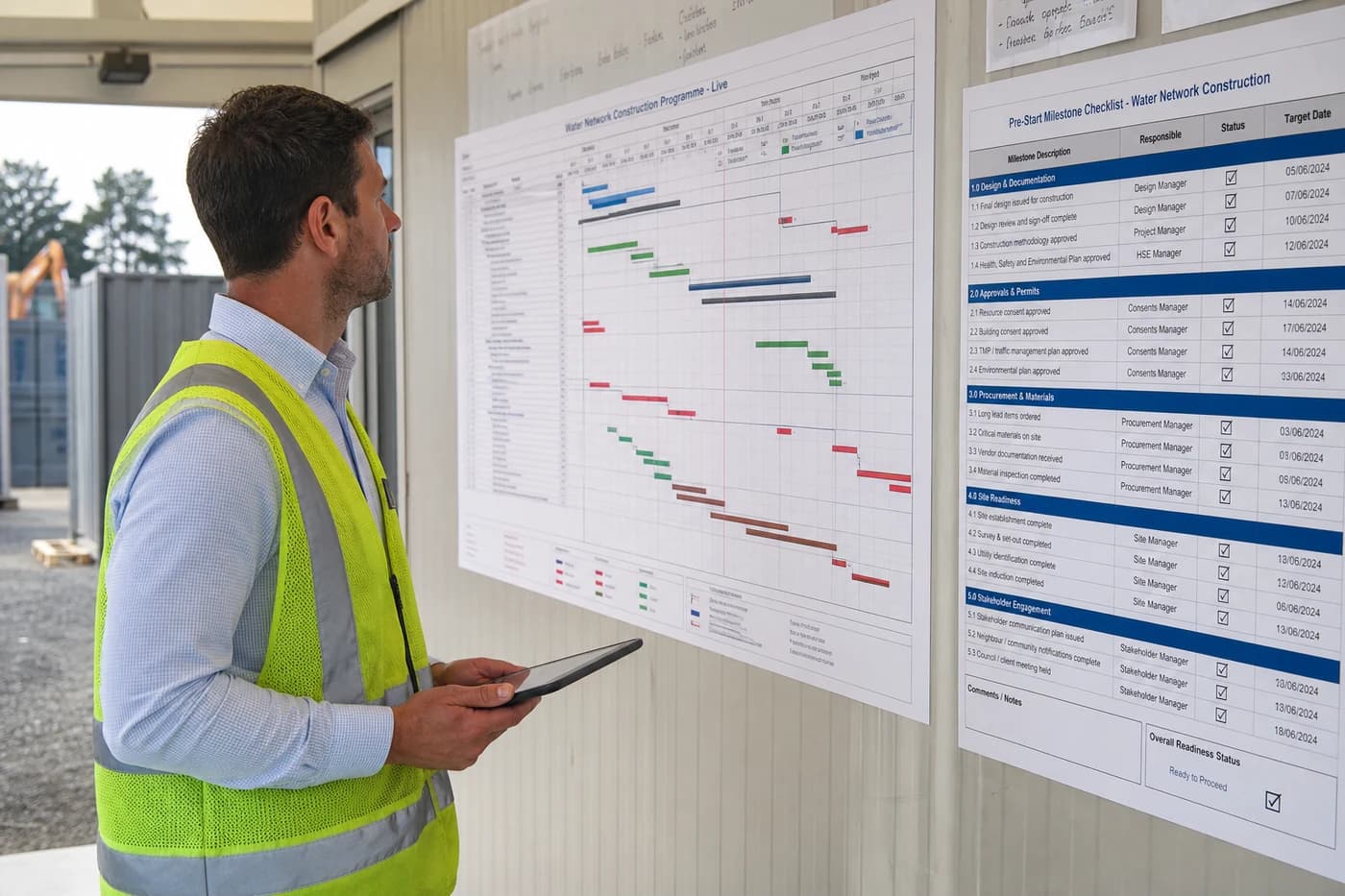
Utilities planning potable scopes can cross-reference potable water main construction and renewal planning for hydraulic and commissioning inputs.
Civil utility construction readiness on live corridors
Civil utility construction on live networks needs more than plant and pipe on site. Confirm service locates, trench support design, dewatering if required, materials certificates, and exclusion zones for pedestrians and adjacent properties.
Verify subcontractor interfaces — traffic control, asphalt reinstatement, landscaping, and authority inspection attendance — are booked for the same window as excavation, not assumed as follow-on trades.
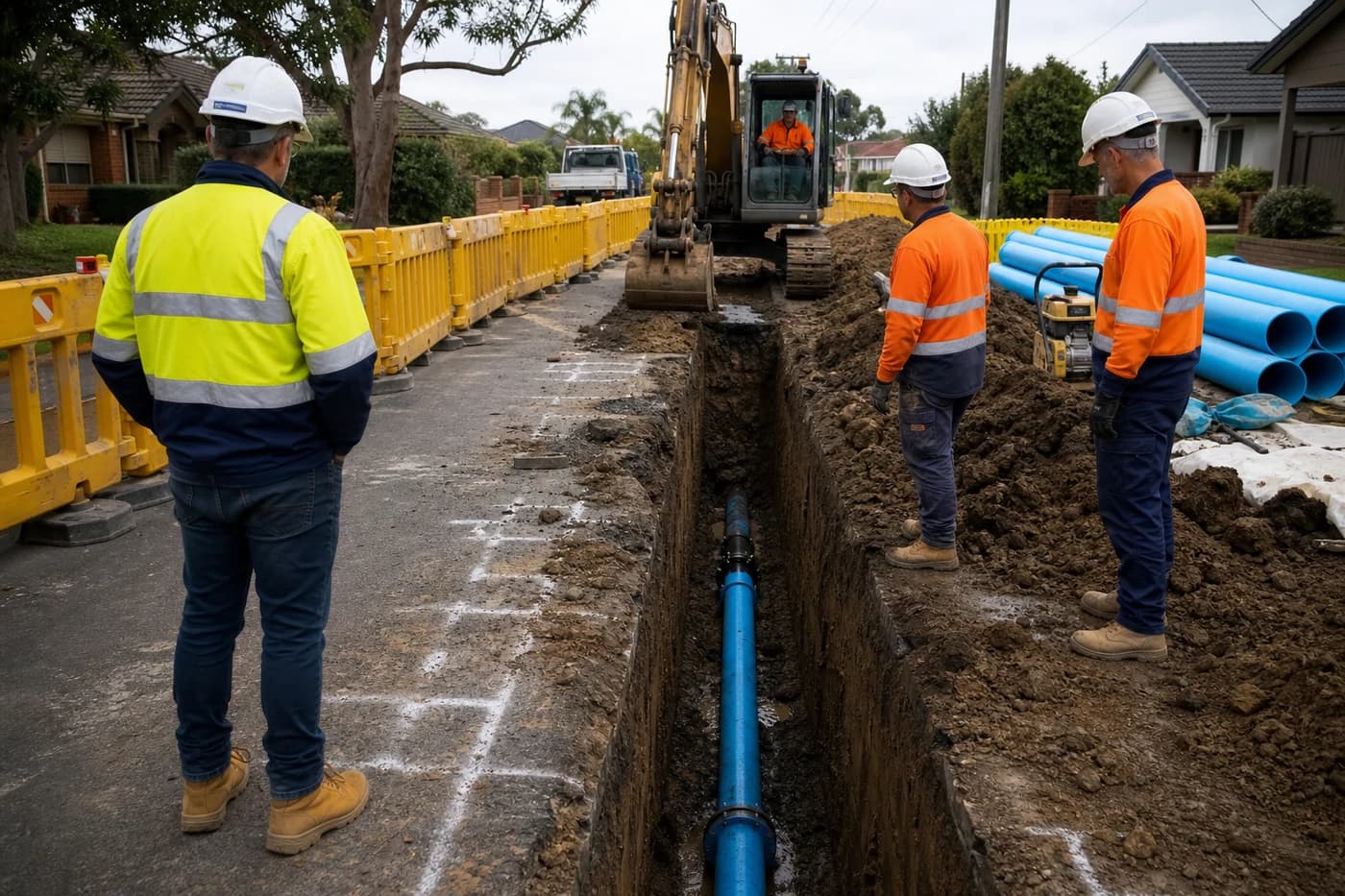
Review live network maintenance and response capability context when programmes interface with emergency assets or rapid-response corridors.
Live network safety and isolation verification
Live network safety starts with named isolation points, verification steps, and maximum outage duration by customer class. Potable tie-ins need chlorination and flushing hold points; wastewater scopes need hygiene controls, gas monitoring, and spill kits before manholes open.
SWMS and rescue plans should be site-specific — not generic templates recycled from unrelated civil jobs. Brief every crew member on outage boundaries, emergency contacts, and who authorises return to service.
Traffic and pedestrian management must match the approved plan. Unapproved lane closures and footpath blocks are a common source of programme stop-work and authority friction.
Water main construction hold points and tie-in planning
Water main construction stages should name joint types, thrust restraint, valve installations, pressure test standards, and sampling regimes before pipe is ordered. Tie-ins on live headers need written isolation plans with bypass capacity — not field decisions after the trench is open.
Hold points for authority or asset-owner inspection should be scheduled — not treated as optional if the programme runs late.
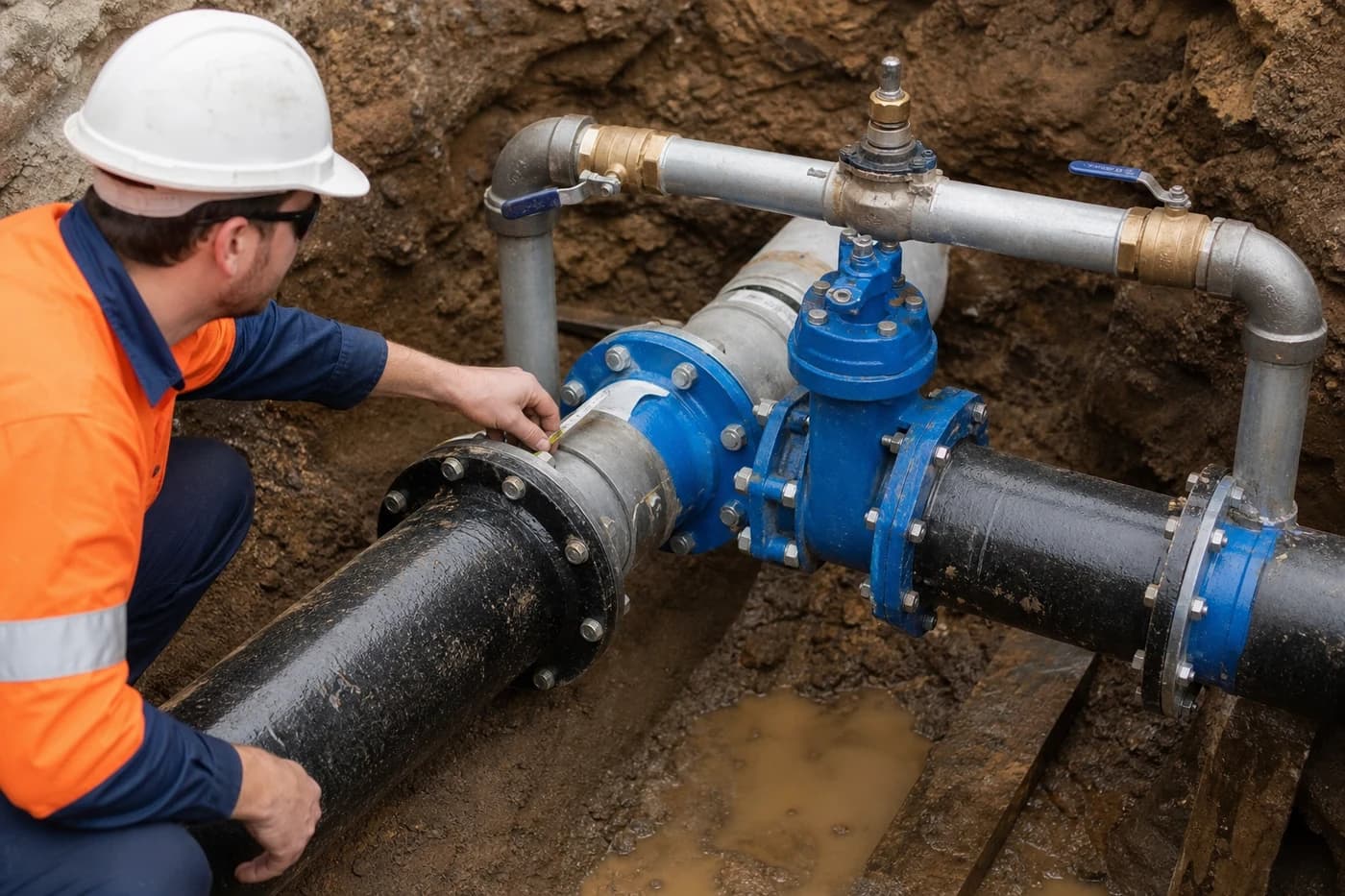
See potable water services for how live tie-ins and pressure assets are delivered on metro and regional programmes.
Pre-start toolbox talks and supervision sign-off
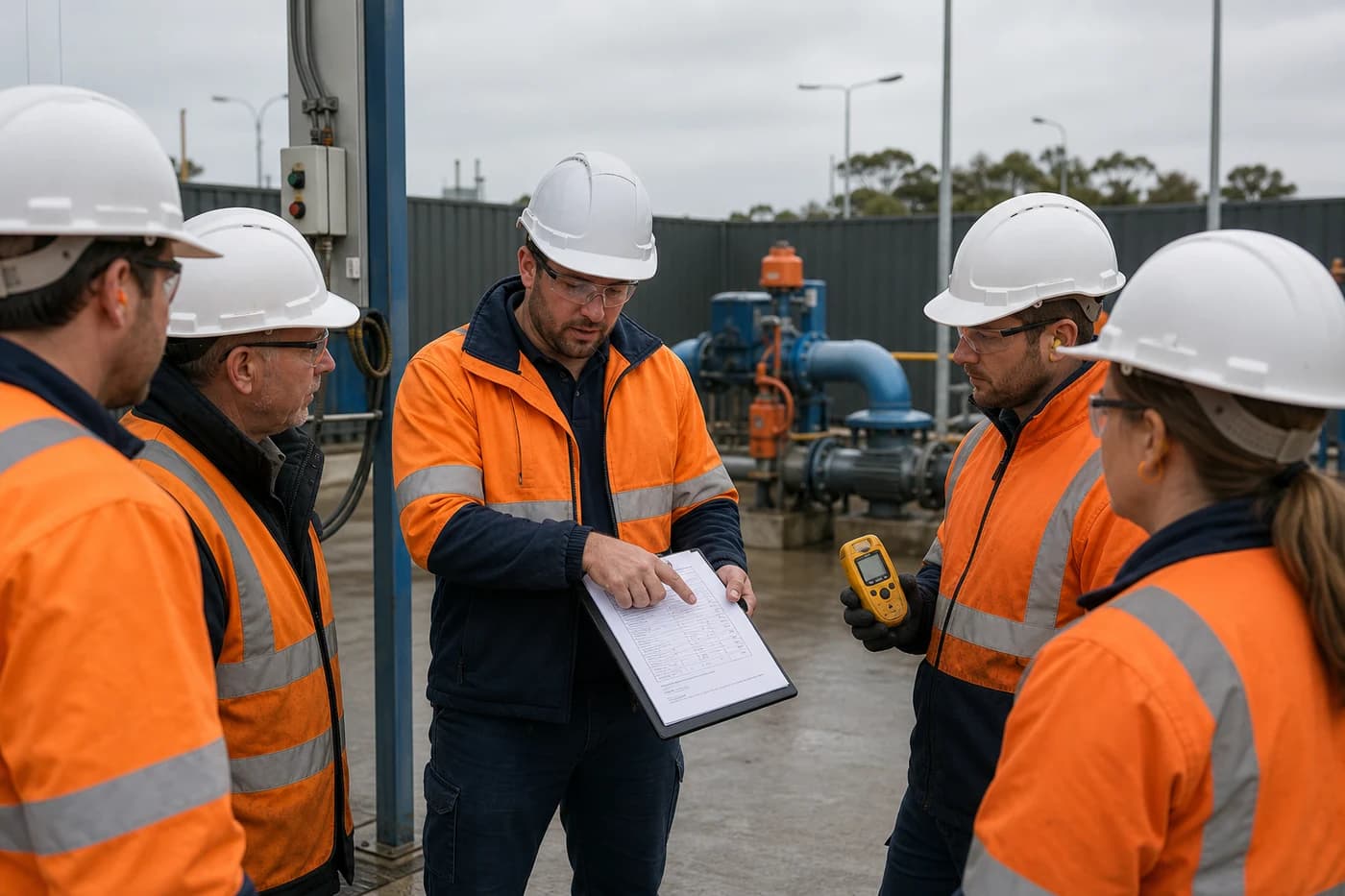
Run a documented toolbox talk covering scope, isolations, hygiene where relevant, traffic boundaries, and today's hold points. Supervisors should confirm competent persons for isolations, testing, and reinstatement inspection.
Photograph service locates, isolation valve positions, and trench support before cover — they become critical evidence if disputes arise later.
For accreditation and works-class context on metro programmes, see major works vs minor works on Sydney Water projects.
The live water network construction checklist
Use this pre-start checklist before each stage mobilises. Adapt for asset type — potable, wastewater, stormwater, or culvert — and contract requirements.
Planning and scope: confirmed design freeze, method statement approved, outage window agreed, authority notifications sent, environmental controls identified, and reinstatement specifications attached to the stage pack.
Services and corridor: service locates completed and marked, traffic management plan approved, pedestrian and driveway access mapped, adjacent utility contacts listed, and trench support designed for depth and soil conditions.
Live network safety: isolation plan with named valves and verification steps, SWMS and rescue plan site-specific, PPE and hygiene kits on site, gas monitoring for sewer assets, and emergency escalation contacts displayed.
Materials and fit-out: pipe and fittings match approved specifications, jointing and bedding standards stated, valves and hydrants identified, test equipment calibrated, and chlorination or flushing consumables available for potable scopes.
Water main construction: tie-in sequence written, bypass capacity confirmed, pressure test regime defined, sampling hold points named, and authority inspection attendance booked where required.
Documentation and handover: photo requirements set, test sheet templates ready, as-built update process agreed, and practical completion sign-off chain identified.
Sign-off: project manager, site supervisor, and quality lead confirm the stage pack is complete — no mobilisation without written pre-start clearance on live networks.
Corridor and community interface checks
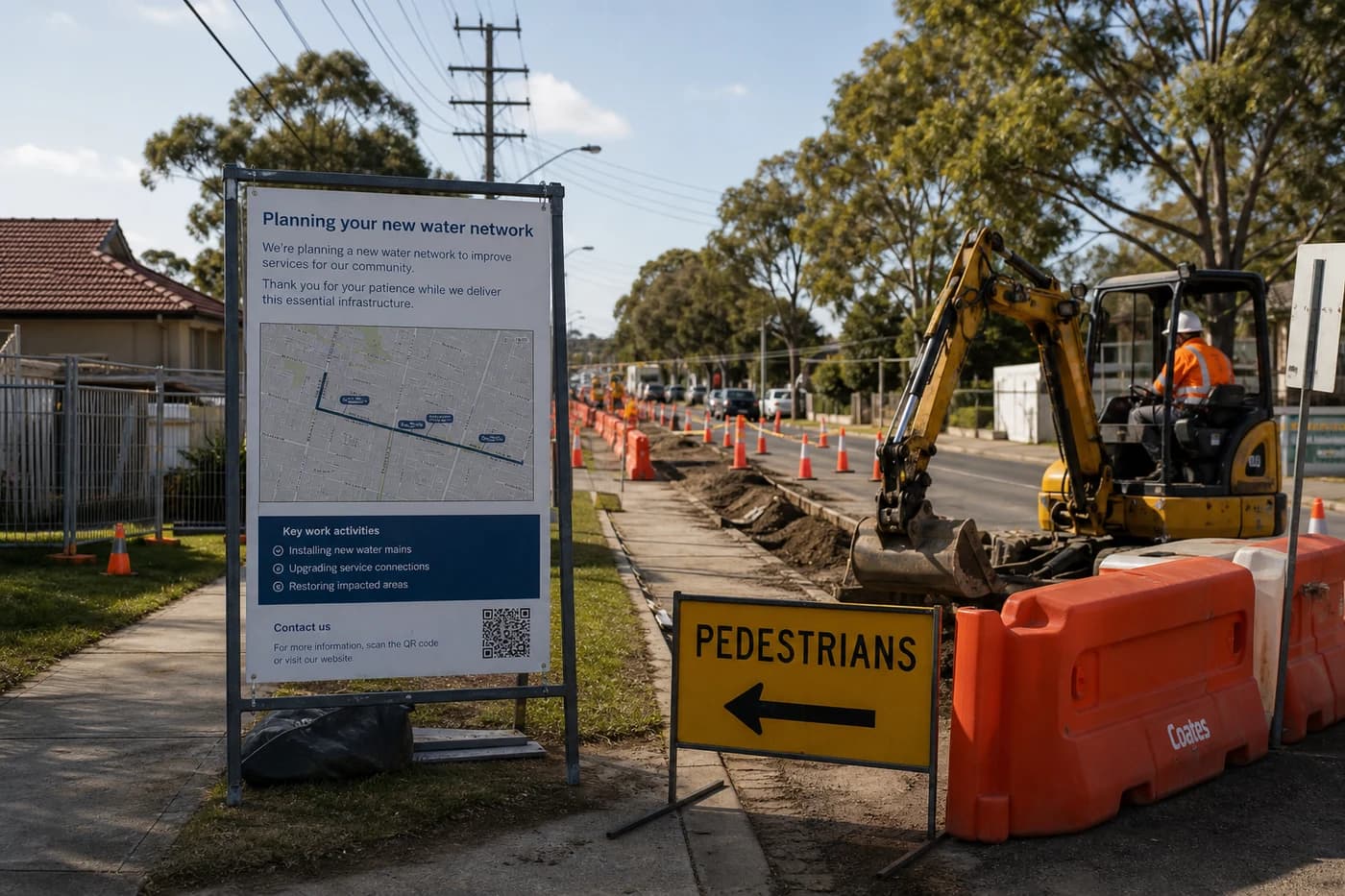
Walk the corridor on paper before machines arrive — schools, bus stops, business loading zones, and vulnerable receivers should appear on the traffic and communication plan.
Resident and business notification templates should state realistic outage windows and contact paths — not best-case estimates copied from greenfield sites.
Government programme leads can review Coreflow's industry experience with utilities, councils, and delivery partners across Sydney and NSW.
Procurement handover to field — closing the gap
Procurement teams should pass isolation limits, accreditation class, inspection regimes, and documentation standards to site leads in one handover pack — not only contract clauses buried in appendices.
When pre-start checks fail, stop mobilisation. Opening trenches to recover programme float without verified isolations is how live-network incidents and reputation damage begin.
Questions on pre-start scope, methodology, or delivery fit can be directed through contact our team with programme summaries and target commencement dates.
Explore water infrastructure services and what a water infrastructure contractor does in Sydney for broader delivery context across the four waters.
Common questions
Frequently asked questions
What should a live water network construction checklist include?
Planning and scope confirmation, service locates, traffic and access plans, isolation and live network safety controls, materials and jointing standards, water main tie-in and testing hold points, documentation requirements, and written pre-start sign-off by project manager, site supervisor, and quality lead.
When should project teams run a pre-start review?
Before each stage mobilises — not only at programme commencement. Isolations, corridor conditions, and authority requirements can change between stages. A stage-specific pre-start gate reduces rework and live-network risk.
How is live network safety different from general civil construction?
Live networks require verified isolations, outage limits, hygiene controls on wastewater assets, chlorination and flushing on potable tie-ins, authority inspection hold points, and documentation suited to utility handover — beyond standard trench and traffic safety.
Who should sign off a pre-start checklist?
At minimum the project manager, site supervisor, and quality or safety lead should confirm the stage pack is complete. Authority or asset-owner representatives may need to attend specific hold points depending on contract and works class.
Related pages